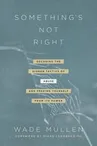
There is a malady which affects the souls, bodies and lives of many men and women, but is barely spoken about. Few understand it, while many subconsciously deny it, whether through ignorance or fear or shame. It may affect someone you know personally, and almost certainly affects people who have had an influence on your life.
What is it and how is it caused?
This malady is called 'Boarding School Syndrome' (BSS). I call it 'Prep School Pain'.
In 1990, author Nick Duffell began to offer support for a specialist group called ‘Boarding School Survivors’. His work helps those who have been sent away from home as children with the psychological impact of what, for them, were traumatic experiences.
This trauma has been caused not only by ‘obvious’ abuse (sexual abuse, bullying, etc) but also by more subtle means. Many psychologists have drawn parallels between children being taken into care and children who have gone to boarding school. In each case, children are deprived of the daily affection from their biological parents.
When a child is sent to boarding school, they can be filled with confusion, guilt and loss. It is confusing to be told by parents that the way they show love is to send you away. This can prompt guilt as the child knows about the cost to their parents, so dare not complain about the cost to themselves. The loss is evident.
This is compounded because even in schools where physical and sexual abuse does not take place, the child may be driven to hide the trauma and pain. Many boarders will tell you that to cry is to show you are weak, which is an immediate opportunity for others to mock. You learn to bottle up your emotions. You train yourself over these formative years to deny your pain and mask the impact.
It is important to stress that the existence of BSS does not mean everyone who has been to boarding school has been affected by it, nor that these symptoms are unique to such people. Many will say their time boarding was the making of them or barely impacted them. But equally, there are many who acknowledge that what happened to them as a child has deeply impacted them throughout their life. Often this only becomes apparent years later. Mark Stibbe, former Vicar at St Andrew’s Chorleywood, has written powerfully about it in his book Home at last: freedom from boarding school pain.
What does it look like?
This malady is hard to discern but, when described, obvious to so many. Research shows that even trained psychologists can ignore or minimise the effect of boarding as a child.
This is partly because the child, then adult, has learned to present so well. You don’t spend thousands on education and not expect your child to excel. The child is trained to do their very best in whatever field they can – preferably several. They are often very successful. Think of how many Prime Ministers, cabinet members, FTSE100 directors – not to mention senior churchmen – have been to boarding school.
One reason the malady is so hard to discern is because it presents in multiple ways, at different times and in different circumstances.
But common themes include periods of emotional numbness, general depression (with no particular or obvious cause), and relationship difficulties, including desires for control. The term ‘periods’ is important. Someone who has learned to hide their emotions may be very good at consistently presenting as emotionally resilient, balanced and good at relating to others. But there may be signs. Excessive self-deprecation (remind you of any recent prime minister?) can be used to deflect and avoid deeper relationships. Boundaries concerning trust may exist, subconsciously groomed through years of self-protection.
Whilst perhaps not deliberate, it may be that friendships later in life continue to revolve around people who have had similar experiences, because implicitly they understand.
Equally, we note that those closest to such sufferers will feel this most intensely. Since even many psychologists miss this malady, and the effects are pernicious, it will place huge burdens on any marriage or perhaps church leadership team. There is ample evidence that marriages have suffered greatly or even broken down as a result of the effects of BSS. Christians are not immune, as Mark Stibbe testifies. It is hard to be married to someone with deep and unresolved, even undiagnosed, trauma.
Why might this be particularly hard for some Christians?
Professor Chuck DeGroat notes that trauma is magnified by silence. Because this is barely talked about, the deep pains from childhood can continue, unacknowledged and/or unaddressed.
It is just possible also that the way we speak of the gospel in our culture hinders the application of that gospel to the lives of those who suffer from Boarding School Syndrome.
Our evangelical culture is rightly seeking to be clear on the doctrines of penal substitution, justification and sanctification. This sits very well for the person who has a highly developed rational and intellectual side. We should perhaps add to this a latent suspicion (at best) of the emotions.
But there is a vast difference between knowing and feeling. An adult who has learned to repress their emotions, to bottle up their pain, may be able to describe the wonder of those doctrines, all the time sensing aridity in their souls.
This tension can provoke a sense of hypocrisy, but in a totally undeliberate way. They want to enjoy what they know is wonderful, but their emotional capacity does not match their intellect.
For a child whose experience of fatherhood is one of them waving goodbye and driving away, it can be hard to feel the passionate longing the father has for his son returning from a far-off place.
For a child who has not known what it is to be hugged, it can be hard to understand the intensity of the hug the father gives his returning son. Like watching a romantic movie, they know it’s real – but not for them (and all their mind tells them it should be).
They have all the rational understanding of the wonder of the gospel, they may even be able to preach it powerfully. But deep down, they are crying out in numbness.
Towards the beginnings of Biblical care
Biblical counselling often speaks of how we are sinners, sufferers and saints. This trauma means there has been intense suffering in childhood, compounded by the guilt and confusion described above.
Healing begins and will continue through providing an antidote to the wound suffered as well as pointing them to the perfect Father. In this case, to provide a safe space, where things can be said without fear of being bullied or ignored or dismissed.
For wounds so deep, it may take time.
Imagine falling off your bike when you’re seven. A piece of grit embeds in your thigh, but rather than being cleaned from your skin, it begins to work itself towards the bone. It is not always painful, but there are times it is excruciating. The act of bringing healing to such a malady requires deep penetration to remove the source of the pain.
Psychologist Diane Langberg has several helpful posts on X (formerly Twitter) recently to guide:
'Caregivers, as you sit with pain, you will want to alleviate it. That is good but be careful. Pain is the sign that something is wrong. Pain is how we know disease is present.'
'When you sit with a griever, your work is to be with them where they are, not drag them out where you are more comfortable.'
'It is never helpful to remind one grieving of what they have not lost or of the fact that it could have been worse. We do not grieve what we have but what we do not have. We compare our loss to the good we had, not to the bad that never happened. The empty space is that - empty.'
Mark Stibbe encourages people to tell their story – which requires a safe space, but also works to rebuild trust.
In his sermon on spiritual warfare[1], Tim Keller cites Richard Baxter’s four causes of depression. The second is psychological, which Tim Keller says, 'needs lots of love'.
This is where the church can play such a significant role. Because we know what it is to be loved, and therefore to show love to others. We are taught what gentleness and patience looks like, as we share with fellow sufferers. We learn to consider others as more important than ourselves as we sit with those who have been unable to speak of their pains. We look to a Saviour who took on our shame and promises never to leave us. We cry to a God who keeps a record of our tears (Psalm 56): each tear shed under the blankets or bottled up for fear of being seen. We look to Jesus who was utterly sinned against, that He might sympathise with those who have been so damaged as (relatively) innocent children.
And so begin the slow journey of healing and restoration. It may be very slow. But that’s ok, because our God is very, very patient, with each of us.