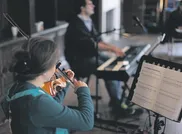
Whenever I get back after a holiday, I have a fear that I’m not going to be able to play the piano any more.
The piano becomes a strange box with white and black keys that I have to press down with fingers that all of a sudden feel like a pack of Cumberland sausages. It’s back to basics for me, which isn’t a bad thing as the basics is what is needed to lead a congregation musically.
So I thought it was about time for some purely practical tips on leading congregational singing. Mostly very obvious tips, not exhaustive tips, not world-shattering silver-bullet tips, just some tips learnt from those more experienced than me and from my own mistakes. Take the useful stuff, drop the rest.
1. Be confident and clear. These two feed off each other — the clearer you feel the rhythm and drive of a song is, the more confident you will be, meaning that the congregation will sing more confidently.
2. Be prepared. This helps to build confidence. Come to the rehearsal or church meeting with a clear idea of:
a. how long the intro is
b. what kind of rhythm is needed to drive each part of the song
c. which instrument/voice is leading
d. how long the links between verses are
e. the dynamics/instrumental make-up for each verse
f. how long the outro is
3. Nail the intro. If you have no time to rehearse anything else, practise the intro six or seven times so that you can’t get it wrong.
Make sure that only one person is responsible for choosing the speed of the song by counting in.
If the song is not well-known, use a solo instrument to play the tune through. Also, keep the instrumentation as empty as possible in the intro and first verse so that the melody can come through clearly.
If you’re using a solo instrument to play the tune in the intro, make sure you avoid playing the tune on the piano as well — this always sounds messy.
Make sure that in the last bar of the intro there is some kind of musical ‘wake-up call’ so that the singers and congregation are clear when to come in. This can be done by a guitarist changing the strumming pattern, a drummer dropping a couple of beats, all of the instruments taking the volume down or dropping out for the last bar of the intro, leaving the drummer to tap on the hi-hat, etc. There are lots of ways of doing this — the important thing, though, is doing it with clarity and confidence. Use the same technique for links between verses.
4. Keep going! If the congregation has come in successfully, then the most important thing is keeping the rhythm tight — don’t worry about playing the right notes! The congregation won’t notice a wrong note or chord if they’re singing their hearts out, but they will notice if the song gets slower or faster. It’s a good thing to practise with a metronome so that you learn when you’re tempted to change tempo. Usually, when a song gets quieter, the temptation is to get slower. Resist temptation! Keep driving on.
5. Finish well. Keep outros short — the congregation wants to sing, not to listen to us musicians dribbling on incessantly or to laugh at the drummer who’s miscounted the verses. I always take the last five minutes of a rehearsal to go over the intros and outros again so that they are fresh in everyone’s mind. I start with the last song and end with the first so that they appear in the right order on everyone’s music stand when it’s time for the meeting to start.
6. Stage management. It’s worth having a good idea of when musicians are needed during a meeting so that you don’t get the whole band rushing up at the last minute knocking stands over, dropping guitars or turning drum machines on inadvertently during the prayers.
7. Pray. Finally, pray that the Lord would give you the right balance of strength to lead and humility to serve.
Richard Simpkin is Director of Music at St. Helen’s Church, Bishopsgate, London.