Roger Loosley reports on a recent lecture at the Royal Society of Arts
The BBC News app on my iPad give me an outline of 36 news stories.
I can quickly see that there is civil unrest in the Ukraine, Egypt and several other countries. Is this part of a trend spreading across the world? We can all access more news and information than we can digest, through the Internet, via our smart phones, tablets, computers, television, radio and newspapers. To get a deeper understanding of what is going on in our world requires detailed research and then consideration of how the results, in various fields together, impact on what is happening worldwide and what it means. If Christians are to be more effective in their ministries and evangelism, an understanding of our world is very important, both in the development of organisations and strategy and in the application of historic truths to modern man.
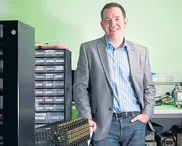
Dr. Moisés Naim
The current world situation was the subject of a lecture by Dr. Moisés Naim, at the Royal Society of Arts on January 16, entitled ‘The End of Power’. Dr. Naim formerly served as Venezuela’s Minister of Industry and Trade and Executive Director of the World Bank. He is a scholar at the Carnegie Endowment for International Peace and an internationally syndicated columnist. In 2013, the British magazine Prospect listed Naim as one of the world’s leading thinkers. His 40-minute lecture and replies to questions included some interesting anecdotes from his book.1 The lecture can be accessed via a podcast.2
The premise of the book is that power is not only shifting e.g. from multinationals to start-ups, from West to East and from men to women, but that power is decaying; those who exercise it are more constrained than ever before. The areas of activity which are examined include, politics, commerce, finance, religion, philanthropy, security and trade unions.
Naim defines power and then explains how it is exercised – through muscle, code (morality and tradition), pitch (persuasion) and reward. He then outlines some of the areas of change the world is undergoing.
Political volatility
The power of governments elected by a majority is limited by the ability of ‘micro powers’ to veto, delay or minimise decisions. These micro powers include one-interest groups, NGOs and ‘coalitions of the angry’. Thus the EU was unable to respond quickly to the financial crises that started in 2008. In response, governments have set up GONGOSs – government organized nongovernmental organisations.
The tenure of politicians is getting shorter and more governments are coalitions. The rise of factions, such as the Tea Party in the USA, the French Socialists and UKIP, that can mobilise voters, means that the mainstream parties have to adapt quickly.
The increase in primaries to select candidates moves power, e.g. from MPs to local party members and even to the local population, whether they support the party or not!
The upsurgence of regional power and legal interventions restrict the power of central government.
Security is being undermined
Size is no longer a guarantee of victory. ‘al-Qu’eda spent about $500,000 to produce 9/11, whereas the direct losses of that day’s destruction, plus the costs of the American response to the attacks, were $3.3 trillion.’3
Between 1950 and 1998, 55% of conflicts were won by the party that would have usually have been considered the weaker. Naim neatly adapts the Churchillian phrase to read ‘Never in the field of human conflict have so few had the potential to do so much damage to so many at so little cost.’4
Naim groups the changes he describes under three headings:
The More Revolution
There is more of everything; not only people but countries, cities, goods and services. Some of the stated facts are truly startling:
• Between 2005 and 2008, across the globe, the proportion of people living in extreme poverty (less than $1.25 a day) plunged. In Africa this reduction is across the board. In 1998 there were more Africans living above the poverty line than below.
• The Millennium Development Goals, set by the United Nations in 2000, are expected to be met in advance of the target date of 2015. The goal to cut the world’s extreme poverty in half by 2015 was met in 2010.
• Since 2000, child mortality has decreased by 17% and child deaths from measles dropped by 60% between 1999 and 2005. According to the World Bank, since 2006, 28 countries moved from being classified as low-income countries to middle-income. The proportion of youths in the population has increased: over 80 countries have populations where the average age is 25 years or less. In some countries the immigrant population has caused this.
• The growth in ‘prosperity gospel’ churches.
The Mobility Revolution
• Immigrants send billions of dollars back home: five times more than all foreign aid and more than all overseas investment in poor countries. The remittances rose from $37 billion in 1980 to $449 billion in 2010.
• Increasing urbanization. In 2007 more people lived in cities than the countryside. They are moving into urban areas at the rate of 65 million a year.
• The brain drain: skilled and better-educated citizens of the poorer countries move to the more affluent nations.
• Some of the ex-pat skilled workers are returning home to become ‘angel investors’ in their home country.
• Mobility has been facilitated by new technology, such as mobile phones, social media and the pre-paid phone card.
The Mentality Revolution
The More Revolution and the Mobility Revolution have created a fast-expanding middle class in developing countries, which has expectations that increase faster than their government can fulfill them. In contrast, the middle class in developed countries is contracting. These situations have the following effects:
• Political turmoil: the election of a clown, Tiririca, in Brazil’s parliamentary elections, with the most votes of any candidate in the country. His stated goal was ‘to help needy people in this country, but especially my family’. It seems that this rebellion against traditional politicians is becoming widespread.
• Sharpens the differences between the mentality and worldview of generations. The baby boomers don’t understand what is going on!
• Increase in divorce in lands where it was previously unheard of.
• Growth of no-interest (Shari’a) finance in countries which, although not Muslim, have large Muslim populations.
• A growing global consensus about the importance of individual autonomy, transparency, fairness and gender equality and intolerance of authority.
• Decline in confidence in governments and the courts.
• The spread of English as a global lingua franca
• Emigration is often driven by aspiration rather than deprivation
The Revolutions’ effect on power
The Three Revolutions curb traditional power. An example is that the USA and the EU are unable to stop illegal immigration. Naim considers the interaction of the four types of power with the Three Revolutions. Concerning the Code (which includes religion) he comments:
1. More Revolution: can moral claims keep up with changing material realities and more information?
2. Mobility Revolution: aspiration attacks all certainties;
3. Mentality Revolution: universal values take precedence over dogma.
‘As their material comforts increase and they gain access to more alternatives, they become less dependent on their inherited belief systems and more open to experimentation with new ones.’5
The impact on the church
While the picture painted in The End of Power is fascinating, does it have any relevance for the church? Many church leaders will be familiar with some of the facts and trends outlined, but may not have seen the complete picture of the world in which we are living. Urbanisation, mobility, working hours, declining family life, insecurity, material aspirations, technology and so on, all have an impact on the ministry of the church.
We must give praise for the way God has answered our prayers for the world’s poor and continue to pray for and give to them.
We must remember that God is in control; we have security and hope (Job 12.9-25).
A retired lawyer, Roger Loosley indulges his love of combining seemingly unrelated ideas obtained through attending lectures, reading and travel. He is actively involved in his local church.