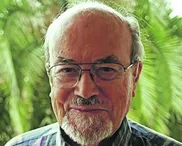
Julia Cameron on the 150th anniversary of the foundation of the Overseas Missionary Fellowship
A spoof of the Bee Gees song ‘Staying Alive’, was sung by senior leaders at OMF’s 150th anniversary, as a gathering in July celebrated its beliefs, vision, mission and values.
There is something compelling about the China Inland Mission /OMF story. Its beginnings can be traced to Susannah Wesley and her prayers for her sons; and to a young stonemason, who decades later threw rotten tomatoes at John Wesley and his travelling preachers in Barnsley, West Yorkshire.
Wedding day prayer
On the morning of his wedding day, that same stonemason, the first James Taylor, walked in the fields, mindful of the vows he would shortly take. Suddenly he found himself reflecting on what he had heard from Wesley. ‘As for me and my house, we shall serve the LORD.’ The words went straight to his heart and he knelt to pray.
Then, realising the time, he dashed home to change and, it is said, friends adjusted the hands of the church clock, so that he arrived just in time for his wedding. His new wife was startled when she heard his news: ‘Have I just married a circuit rider?’ she uttered in dismay.
The grace shown to James Taylor (1749–1795) on that chilly February morning in 1776 would travel down the generations. The historian K. S. Latourette was to rate Taylor’s great-grandson, James Hudson Taylor (1832–1905) as ‘one of the four or five most influential Westerners in China’.
How to flourish after 150 years
Few movements last 150 years. OMF has retained its original beliefs, vision, mission and values; and adapted with the times. It has remained anchored, while forward-looking. The key? Under God, to appoint successive leaders who, rooted in Scripture, can distinguish between the three Ps of Principles, which never change; Policies, which, while not changed lightly, need freedom to adapt; and Practice, which may need to change frequently for the frontline to be effective at local level.
Now operating in 32 centres across 25 countries, and with diverse ministries, OMF has hundreds of leaders. National leaders; ministry leaders; those who train new workers; church-planters; those seconded to teach in seminaries. All must distinguish between the three Ps and ‘stay aligned’.
Barnsley to Brighton to China
Few would have noticed 40 or so people on Brighton beach on 25 June, 2015 (see en August, p.5). They were there to commemorate an unremarkable sight 150 years earlier: James Hudson Taylor pacing the beach alone. (By 1865 he had been in China for several years, serving with the Chinese Evangelisation Society.) His heart was troubled at the comfort of Christians in church that Sunday morning, while the inland provinces of China were unreached, and he resolved, with God’s help, to find a way to forge into those provinces. Taylor bore one of the clearest marks of a leader, indeed its sine qua non: a sense of dissatisfaction with what is. Now, what stories there are to tell, here and in heaven, of the years between these two summer tableaux.
And so it was that the China Inland Mission (CIM) was born, ‘with £10 in the bank, and all the promises of God’. Taylor prayed for ‘24 skilful, willing workers’, two for each of China’s provinces and two for Mongolia. Each should be skilful – naturally gifted – as well as willing; and they would travel in twos (Luke 10.1), for there would be sparse support, especially in the early days. Each would need that same ‘gift of dissatisfaction’. They would form a new breed of missionaries, setting a radical precedent of dressing in Chinese clothes, with the men growing a queue. They were to ‘become Chinese in all matters which were not sinful’.
Further, Hudson Taylor brought into mission-thinking a new principle: that decisions be taken close to the place where they will be felt. And his plan for financial support became a watchword for missionary living – members of the CIM were ‘to move men through God, by prayer alone’. That is, they would not ask anyone for financial support, but they would pray for it.
Keeping and telling the story.
Within months of founding the CIM, Hudson Taylor wrote his first book: China: its spiritual needs and claims. The first printing sold out quickly. ‘Communication is the lifeblood of the mission’, he wrote, ‘second only to prayer’. His regular news China’s organ Millions was a priority. The magazine, later called East Asia’s Millions, then East Asia’s Billions, and now, to keep librarians and archivists on their toes, simply Billions, was an early flagship. The mission has drawn gifted writers. This is why the history of the church in East Asia is better-documented than in many parts of the world; and why it is well cared-for in major Western archive libraries. Through OMF’s book publishing, its contribution to the wider church has been profound.
Celebrating the anniversary year
In July over a thousand gathered in North Thailand for five days to ‘Remember. Rejoice. Renew.’ The fare from the platform was rich and substantial, and some of it will be made available more widely. Lindsay Brown gave the Bible readings.
Quoting the Latin American missiologist Samuel Escobar, Lindsay spoke of three kinds of people a movement must have, if it is to last and flourish: historians to tell stories; teachers to impart values and distinc-tives; prophets and visionaries to speak into the contemporary context and set a trajectory. While the first two could be in danger of living in the past, the third could take off at a tangent. The tensions of holding all three together, had, Lindsay said, marked the life and the modelling of OMF.
Hudson Taylor saw the strategic nature of the city. Cities house the government, national media, universities and technology industries. It is in cities that almost all innovation occurs. Cities must no longer be regarded only as major centres within a nation; they are becoming globally-aware hubs in their own rights. By 2035 some 70% of people will live in cities. Much work will need to be done in bringing the gospel to each generation of city-dweller: to its nationals and its diasporas; in the universities and in the business and political arenas; and to its techno future-shapers. Megacities will keep on expanding, to house the poorest of the poor.
Bishop Hwa Yung from Malaysia, one of East Asia’s senior missiologists, looked at OMF’s contribution to 21st-century mission. It was, he said, ‘a multi-polar world of unforeseeable complexity’. Jamie Taylor (James Hudson Taylor IV), like his father, Jim, a keen sinologist and careful historian, surveyed the fellowship’s history: its frontiers; values; and the costly service of its workers.
Twenty-four ‘skilful, willing workers’ sailed from the UK to China in 1866. Now frontline and support teams number 2500 from 40 nations. The tenth and current General Director, Patrick Fung, appointed in 2006, is the first Asian in that role. Patrick and his wife Jennie are both medical doctors. Patrick, a humble man who commands clear authority, professed faith in Christ as an international student in Sydney. He led the Thailand gathering in a memorable and sombre act of confession. He said he wanted to see significant growth in what had perhaps become neglected frontiers: peoples of the high plateaus in China; diaspora returnees; and single-party countries. There were now around 100 new workers arriving each year. ‘Pray,’ he urged, ‘for 150.’
‘Staying Aligned’ for the future
David Pickard (eighth General Director, 1991–2001) summed up the leader’s agenda, under God, in the pithiest way I have heard articulated by anyone. Three terse questions: ‘What next? What else? What not?’
An unexpected ‘What else?’ is a venture in Africa. Hudson Taylor had particularly encouraged what became the South Africa General Mission (later Africa Evangelical Fellowship, part of SIM). Now his own mission is serving on that mighty continent. OMF is working to help Africans to reach the huge Chinese diaspora who are establishing communities and businesses in several African countries. The invitation from African leaders gained momentum at the Third Lausanne Congress.
We often refer to ‘the unfinished task’. The phrase comes (I think) from Frank Houghton’s searching hymn, Facing a Task Unfinished, sung at so many mission conferences. Houghton was bishop of Eastern Szechwan, and fourth and last General Director of the China Inland Mission (1940-51) before its ‘reluctant exodus’.
To mark OMF’s 150th anniversary, Keith and Kristyn Getty have devised a new setting to this hymn, retaining much of its original, to launch in a special tour, ‘The Task Unfinished’, in February 2016. May it help raise up a new generation of ‘skilful, willing workers’; able, gifted, dissatisfied men and women who will not stand by while ‘other lords [beside Christ] hold their unhindered sway’.