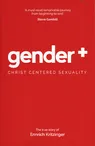
Dr Trevor Stammers warns that advances in medical technology can be a double-edged sword
I was thinking recently about some current pressing issues in medical ethics.
Specifically gender dysphoria, advances in assisted reproduction and transhumanism were in my mind. What biblical thread might possibly connect them?
One that came to mind is to be found twice in Proverbs. First in 22.28 ‘Do not move an ancient boundary stone set up by your ancestors’. In the New Century Translation, the second phrase is rendered ‘because those stones were set up by your ancestors’ making this more of an explicit explanation than just a descriptive clause.
However, Proverbs 23.10–11 offers another explanation as to why disobeying the initial command is such a serious matter: ‘Do not move the ancient boundary. Or go into the fields of the fatherless, for their Redeemer is strong; he will plead their case against you.…’
Continuity and ownership
The boundary stone then can signify two things. Firstly, respect for and continuity with previous generations. The boundary stone reminds us that we are not autonomous islands. We are connected to the mainland of the community which conceived, birthed and nurtured us. Roots are important in our lives and if we become torn from them, especially in infancy, this causes great harm.
Secondly, ownership – the boundary stone indicated who owned the land. For others to enter it and take it by moving the boundary was theft. Furthermore, God is proclaimed as the Defender or Redeemer of those wronged by such a move, declaring that he will act against those who take what is not theirs.
I suggest that the ethical issues of assisted reproduction, gender dysphoria and trans-humanism all have in common that they seek to move those boundary stones set by our heavenly Father that signify both our kinship1 and our ownership2 by him.
All three of the boundary stones I have in mind are found in the early chapters of Genesis and I shall take them in the order they appear there.
Binary sexual differentiation
Firstly we are sexually differentiated in a specific way. Recently a school in Brighton encouraged its pupils to identify with one of 23 different genders3 including ‘gender fluid’ ‘demi-boy’ or ‘non-binary’. Now I know that gender is not synonymous with chromosomal sex and that chromosomal intersexes can and do occur, but no matter how much the idea of being ‘non-binary’ may be bandied around in Brighton, the Scriptures clearly and unequivocally state that we are differentiated in a sexual binary
Genesis 1.27 states: ‘So God created mankind in his own image, in the image of God he created them; male and female he created them.’ Now this is not a text to make you feel guilty if you are a male who prefers ballet dancing to footie or a woman who would rather be an astronaut than a homemaker. It is just stating the reality we observe around us and that is imprinted in nature – part of what is ‘understood from what has been made, so that people are without excuse’4. In a recent interview, Eddie Redmayne revealed that filming The Danish Girl had been an education for him, one in which he had learned for the first time that gender is fluid5. What he was actually saying is that a boundary stone has been moved in his life and, sadly, he is totally unaware of the danger of this, both to him and the many fans who follow him.
Procreation and marital sex
The second boundary stone is inferred from Genesis 1.28: ‘And God blessed them. And God said to them “Be fruitful and multiply.”.’ and the mode of achieving this follows in Genesis 2.24: ‘A man shall leave his father and his mother and hold fast to his wife and the two shall become one flesh.’
Sexual union and reproduction are intimately linked in Scripture. Every advance of technology that separates these two is a double-edged sword at best and an unmitigated evil at worst. Initially, 20th-century technology made it easy and safe to separate sexual union from procreation. Who can deny that the advent of contraception, whatever its many benefits that most Christians as much as others take advantage of, has contributed to increased sexual immorality and rising rates of sexually transmitted disease crises and abortions?
IVF, though it has brought the joy of children into the lives of many, has also separated procreation from sexual union and thus provided the foundation not only for the commercial exploitation of women worldwide for their eggs, but also for many of the techniques of the new genetic revolution. Using human cloning and artificial gametes derived from induced pluripotent skin cells, man for the first time may be able create man in his own image. This ability is still in its infancy, but it will inevitably progress – at least among the rich nations – if the technology makes it possible.
What is the origin of this strong drive that makes us so want to have children who are our genetic offspring if at all possible? This seems to be part of the image of God in us, but if we use unethical means to achieve even legitimate God-given yearnings, the costs can be very high.
Blessed bodies
The third and final boundary stone is found in Genesis 2.23 and its context: ‘The man said, “This is now bone of my bones, And flesh of my flesh; She shall be called Woman”.’ To be human is to be embodied. We are ensouled bodies as much as embodied souls and in the resurrection to come he will ‘transform our lowly bodies so that they will be like his glorious body.’6 Our bodies are not an optional extra and, contra Plato, our eternal destiny is not that our disembodied spirits ascend to the world of the Forms, but rather that we eat and drink with our Lord7 at his wedding feast8 and enjoy heavenly union with him for evermore9.
The Givenness of Things10 is the latest book from the great American Christian novelist Marilynne Robinson, now in her 70s. In the essay entitled ‘Experience’ she writes: ‘Disliking subjectivity will never make it go away. Here is an idea that would make Descartes blanch. Apparently there are scientists who believe that at some point fairly soon we will be able to upload our minds to computers, freeing ourselves from our bodies being therefore immortal.’
This is reminiscent of the serpent’s provocation of Eve to move another boundary stone: ‘God says we must not eat it or touch it or we will die’. ‘You will not die for God knows that your eyes will be opened when you eat it.’
Robinson continues: ‘I suppose they will program in the virtual experience of taking the uploaded dog for a walk in the virtual park, through the rain on random assorted virtual days adjusted to reflect the weather patterns in some selected place and season. These immortals would at last be free of the thousand natural shocks that flesh is heir to, and with them no doubt of all urgent reflection on what we are and what we mean. Then physical reality, let us say a great solar storm, would sweep them all away making the necessary point that the physical is not to be transcended.’
Every time we meet at the Lord’s table, we celebrate the bodily suffering and resurrection of the Incarnate God. The one whose first miracle was to turn gallons of water into the best vintage vine at the wedding in Cana11 will not drink wine again until he drinks it with his disciples12 at the wedding feast at which he is the heavenly bridegroom and we brothers and sisters in Christ, who believe in him, will be there as his bride – citizens of the heavenly Jerusalem. Do we believe it? Is that what we are living for? And longing that those we know and love should be there too?
Bioethics – a spiritual matter
We are not just fighting against flesh and blood in evaluating biomedical advances, but against the powers of darkness13 and of that ancient serpent14 whose head is not yet completely crushed15. Bioethics is no different in facing the spiritual dimensions of gender fluidity, the separation of procreation from sexual union in marriage between men and women and the fantasy elements of transhu-manism’s hope for an upgraded future. Let us understand the times16, discern what the Spirit is saying17 and do all we can to open our eyes and the eyes of others to the reality of the Living God, who will hold us accountable for our actions and who warns us that there are boundaries we should not cross or move.
This article is adapted from a Bible reading given at the 2016 East Anglia Regional CMF conference. Dr Stammers is a medical ethicist and past chair of CMF.
FOOTNOTES
1. Matt 12.48-49;
2. 1 Cor 6.20, 7.23;
3. www. theargus.co.uk/news/14236195.Brighton_school_ children_asked_to_choose_from_list_of_23_terms_to_ describe_their_gender/;
4. Romans 1.20;
5. www.youtube.com/watch?v=v8N2y3wRtN8 at approx. 4’40;
6. Phil 3.21;
7. Matt 26.29;
8. Rev 19.6-9;
9. 1 Cor 6.17, Eph 5.30-32;
10. Robinson M. 2015 The Givenness of Things, Virago Press;
11. John 2.1-12;
12. Matt 26.29;
13. Eph 6.12;
14. Rev 20.2;
15. Romans 16.20;
16. 1 Chron 12.32;
17. Rev 2.29, 3.22