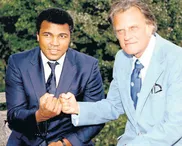
Richard Bewes recounts his childhood with missionary parents in East Africa
My parents were missionaries in Kenya.
And God’s awakening power in the East African Revival came in the middle of the 20th century while I was growing up there.
My parents, Cecil and Sylvia Bewes, had first been on the front line of evangelism and church planting in the remote Kenyan area of Kabare. They were facing the animistic beliefs of East Africa, together with the hold that the mundu-mugo (witch doctor) had upon the people. For them and their African colleagues, it was prayer, the Bible and the steady proclamation of the cross that would ultimately overthrow the powers of darkness. And revival? As my saintly mother would later laugh: ‘Revival couldn’t really come to Kabare until after we’d left!’
Power of the cross
It was at my second African home, in Weithaga – 6,000 feet up, and on the lower slopes of Mount Kenya – that I first sensed the power of the cross touch great numbers of people. Under the red corrugated iron roof of our bungalow we were without running water, sanitation, gas or electricity, and there were no shops, doctors or hospitals anywhere within the region. It was only ‘Auntie Lorna’ – a single missionary of uncertain age – who, though not a qualified nurse, held a somewhat tenuous authority to dispense iodine, bandages and the occasional injection from her minute dispensary nearby.
My dad’s missionary car was the only available form of transport. Indeed, within the battered box-body of the Ford V8, a small Kikuyu baby was, one day, prematurely born – delivered by Dad.
Tropical hazards
It was inevitable that I would grow up bilingual, and even to this day I can sing you ‘Blessed Assurance’ in the Kikuyu dialect! Certain care had to be negotiated against a variety of tropical hazards. Before the development of pesticides, vast locust swarms – 50 miles in length – would sweep down along East Africa’s great Rift Valley. The sky could become black as night. We would hear the branches of trees cracking under their weight. Car drivers had to stop when their windscreens became blotted out. I can recall seeing my dad vainly trying to beat off a terrifying swarm with the aid of a single tennis racket.
Or there were the siafu (safari ants), which would devour anything living in their path. Oh, the shock, when one morning it was discovered that a line of ants had gone through our hen house, and had entirely consumed a single hen sitting dutifully upon her eggs, leaving only a bare skeleton. ‘Jiggers’, in the toes, and tarantulas, in the shoes, had to be reckoned with, while poisonous puff adders could be a menace to livestock and humans.
Yet all this we seemed to take in our stride – this was Africa! No child could have had a calmer upbringing, educated as we were by my mother on the side veranda of our missionary home, that is still in existence.
Some miles away rolled the Maragua river, and Dad would sometimes take us fishing for trout in the icy waters that flowed out of the glaciers of Mount Kenya. On one such expedition, Dad shot a python that was strangling a small impala, and for some years the python’s skin served as a gruesome reminder along the whole length of the veranda.
Revival in Weithaga
With Bible stories every night, together with readings from Kipling’s Just So Stories and Bunyan’s Pilgrim’s Progress, the Revival – when it descended upon Weithaga – was to me the most natural occurrence that could ever have happened. It fitted in completely with the umpteen stories from the Scriptures that had slowly been building my own boyhood understanding of the meaning of life in this world.
Obviously – with the infusion of new life from above – there were crowds! On Sundays we would go down to the sizeable church developed by my dad, but there would be no room to contain the vast numbers. The grass around the church would have to be beaten down – for fear of snakes – before anything could begin.
Then the drums would start to roll, and the preaching would begin! During the great Christian festivals, the crowds were uncountable; was it 4,000, 6,000 … 8,000? At harvest time, numerous sticks of sugar cane, great bunches of bananas, flapping poultry – and even live goats – would be joyfully brought to church by grateful worshippers. Our African neighbours loved singing at the best of times, and on any day we would hear the songs of the gospel as they echoed across the valleys and hills of the Kikuyu Highlands. Lives were changed and testimonies abounded in the frequent ‘fellowship meetings’ attended by those who were being touched by the remarkable awakening.
Restitution
One day a man came to our door. ‘I have come,’ he said, ‘because Jesus has come into my life and I am here to bring you restitution.’ ‘Restitution?’ said Dad. ‘Whatever do you mean?’ ‘Ah,’ came the reply, ‘you would never have known. But I used to sell you eggs, here at the front door, and I have to tell you that for many months I was first going round to the back of your house where you keep your chickens, and I was stealing the eggs laid by your hens … and bringing them round to the front door to sell you your own eggs! I have repented, by the blood of Jesus, and that’s why I’m here.’
With the renewed emphasis on the saving gospel of Christ, evangelism became a priority. One day a mission was announced at Weithaga. The church elders were thrilled at the prospect and sent word out around the locality, giving a date for its beginning. They even agreed unanimously to announce the preacher for the event.
‘There’s one man, surely, whom we want … and it’s Mwangi.’ But then, where was Mwangi to be found? There were no phones. Runners were sent out to locate Mwangi, but no word came back. The day of the Mission’s opening drew ever nearer, and anxiety began to set in. Where was our gifted Kikuyu preacher?
But finally, on the very first day of the Mission, Mwangi turned up. ‘Oh, Mwangi – praise God! So word got to you then?’ ‘Word? What word? I never got any message.’ ‘Why – we’ve sent out messengers everywhere to look for you! Where have you been all this time?’
‘Oh,’ came the reply, ‘I’ve been out in the bush, having some quiet days with the Lord. But only this morning the Lord seemed to be saying to me: ‘Mwangi, you must go now. They are needing you at Weithaga!’’
This was the atmosphere of the Spirit-led community that I was becoming accustomed to – and it was very African. There came the day when, from the centre of the Revival, two inspiring evangelists – whose speaking had been signally blessed in Rwanda and Uganda – arrived in Weithaga; Simeoni Nsibambi and Yosiya Kinuka.
One day, Dad remarked on the fact that Simeoni went everywhere in bare feet, and Dad asked: ‘Why? We’d be glad enough to get you some shoes, if that would help.’
‘Not for me,’ replied the evangelist. ‘Shoes are good – but having grown up from the beginning without them, I have to tell you that every time I put shoes on my feet, I could sense pride welling up in my heart. I prefer to stay as I am.’ ‘I understand,’ came the reply. Then Dad pointed at Simeoni’s companion. ‘But what about Yosiya, then? We can see that he wears shoes!’ ‘Yes, he does,’ agreed Simeoni. ‘But he’s taken them out of his heart!’ And that, indeed, is what seems to happen to motives and actions, when the reviving Spirit of the Lord takes over.