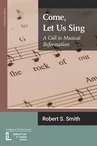
I couldn’t resist writing a double-bill on the Reformation.
This kind of opportunity only arises every 500 years, so I just might not get another chance. I’ve done a couple of talks on music in the Reformation, which means that I’ve learnt a huge amount about the convictions and sacrifices of the musicians of the 16th century. One of my new heroines is Katherine Parr, Henry VIII’s sixth wife. We need to give thanks that Henry didn’t bow to the pressure of his Catholic advisors who wanted to send her to the same end as Anne Boleyn.
On the music scene, Katherine was absolutely key in making sure that the sung Word of God was audible. She even wrote her own words in English set to music by Thomas Tallis. We won’t know until we meet her in the New Creation whether this was because she didn’t trust the Catholic Tallis not to write in Latin! She was also hugely instrumental in bringing up her step-daughter Elizabeth with a Protestant music education. Hooray for Katherine Parr!
I’ve also been struck by the different practices of those who had similar Reformation convictions. The Protestant Edward VI got rid of organs in English churches because he considered them to be distractions from the preaching of the Word. However, when Luther built a chapel in Torgau, he placed an organ immediately above the communion table, because he wanted the sung Word to be as central as the spoken Word. Who was right? It doesn’t really matter, because in both instances the audibility of the Word of God was their aim and passion.
Strumming along with Luther
I think my favourite piece of Reformation trivia involves Martin Luther. A while ago I reviewed David T. Gordon’s Why Jonny Can’t Sing Hymns, where he says that ‘guitar-playing just doesn’t sound serious; it sounds like casual amusement. We simply cannot accompany Martin Luther’s A mighty fortress is our God successfully with a guitar.’ Well, would you believe it, the picture is of the great man himself doing the unthinkable – ‘No Martin! Put the guitar down, Martin!’ OK, it’s a lute, but it’s as near as you could get to a guitar in the 16th century.
I’ve also learnt that pre-Reformation thinking is still very much at large – I mentioned in my last article that many churches still rely on professional clerics and musicians to engage with God on behalf of the congregation.
Singing together is important
Keith and Kristyn Getty make the point well in their book, Sing: ‘We live in a time when the importance of music in church has been elevated greatly. But at the same time, we are in danger of lowering the importance we place on singing together. Listening to each other mumbling quietly along as a band performs brilliantly on stage… is not the same as singing together as a congregation’.
The Gettys are right to distinguish between music and singing here. Elevating music is not the same as encouraging corporate singing. 16th-century church music composers made the same mistake when they wrote music that could only be performed by professionals and where the words were unintelligible. The real sadness was they didn’t see this as a mistake, but rather a firm conviction.
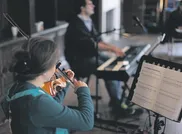
Here’s an example of this conviction shown in a quote from a City of London church bulletin, printed just last month: ‘The congregation participates largely silently, as the clergy, readers and musicians present the most worthy offering to God of which the church is capable.’ This was from an Anglo-Catholic church, but it’s not dissimilar to the meeting where a band and worship leader perform songs that Christians like to listen to, but which an ordinary congregation member finds it hard to sing.
Serving not performing
We need some 21st-century Reformation thinking: whether you have an organ front and centre like Luther, or whether you get rid of your church organ like Edward, hold on to the same convictions, along with Katherine Parr: pray for church musicians and song writers to be committed to serving the Word of God, so that we can proclaim the truths of the gospel as one voice confidently, clearly and passionately.