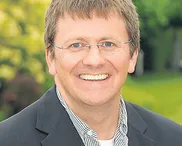
Tim Chester is our guide along the Keswick Convention’s path to world mission
‘Unknown to me, I had been waiting for this moment. Every part of me tingled with fervent joy and happiness that I was allowed the privilege of responding, and that Christ was inviting me to serve him, to be called his ambassador, his missionary.’
That is Helen Roseveare’s description of the moment when she went forward at the 1946 Keswick Convention to commit herself to the task of world mission.
This is only the beginning
The year before she had met with Christ in a new way during a student retreat. That evening Graham Scroggie, a leading figure in the Keswick movement, wrote Philippians 3.10 in her Bible. ‘Tonight you’ve entered into the first part of the verse: “That I may know him”,’ he told her. ‘This is only the beginning, and there’s a long journey ahead. My prayer for you is that you will go on through the verse to know “the power of his resurrection” and also, God willing, one day perhaps, “the fellowship of his sufferings, being made conformable unto his death.’’’
At the Convention in 1946 Roseveare vowed: ‘I’ll go anywhere God wants me to, whatever the cost.’ After completing her studies in medicine, she sailed to what is now the Democratic Republic of Congo.
Initially the Keswick Convention was reluctant to involve itself in world mission. Its leaders felt it had a specific and limited focus which was to encourage holiness. Henry Bowker, an early chairman, said caustically that missions meant ‘secretaries [of mission agencies] quarrelling for collections: it would spoil Keswick.’
Unofficial prayer meeting
All this changed in 1885, ten years after the first Convention. Reginald Radcliffe, a Liverpool solicitor and evangelist, invited some friends to join him for a missionary prayer meeting. Despite the fact that unofficial events were discouraged, the meeting was packed. At the end of the Convention a group of Cambridge students stood up in a testimony meeting to offer themselves for overseas service.
Also present were Barclay Buxton and Archibald Orr-Ewing. Buxton would go on to serve in Japan, founding the Japan Evangelistic Band at the 1903 Convention, while Orr-Ewing went as a missionary to China.
The Convention embraced this impulse, seeing it as a move of God’s Spirit. Two years later Hudson Taylor, the visionary founder of the China Inland Mission, spoke at the Convention along with James Johnson, a bishop from West Africa. Three women who were about to leave as missionaries also gave their testimonies. As a result 30 young people offered themselves for missionary service.
By now Henry Bowker, once so dismissive of a missionary focus, had completely changed in his mind. At the 1888 Convention he said: ‘Consecration and the evangelisation of the world ought to go together.’ Ever since, the Convention has invited people to consider committing themselves to mission at home and abroad.
Collection for mission
There was another shift in 1888 when a collection was taken for mission. £1,060 was raised – the equivalent of over £100,000 today. The money was used to send George Grubb, a Keswick regular, on a speaking tour of Sri Lanka and India. The first missionary to be sent by the Keswick Convention was Louisa Townsend, who went at her own expense to work in Galilee. Then in 1893 Amy Carmichael became the first long-term missionary to be supported by the Convention. She went initially to Japan before establishing the Donahvur Fellowship in India. Carmichael went on to have a worldwide influence through her devotional writings. By the turn of the century, 13 missionaries had been sent from the Convention in partnership with missionary agencies to China, India, South Africa and Egypt.
The Keswick Convention also became a place to network for mission.
In 1910 the famous World Missionary Conference in Edinburgh refused to recognise South America as a mission field because of the Catholic presence in the continent. So the following year the Evangelical Union of South America (now Latin Link) was launched at the Convention. Then in 1931 the Unevangelised Fields Mission (UFM – now standing for United for Mission) was founded at the Convention.
Offering themselves for service
In the first half of the 20th century between 100 and 400 people indicated their desire to consider missionary service. In one meeting alone, in 1938, 550 people came forward. Of course, not everyone made it to the mission field, but many hundreds did. W.H. Aldis, a two-time chair of the Convention in the 1930s and 1940s, once said: ‘I suppose the Keswick Convention has done more than any other movement in the churches to call men and women to the mission field.’
In Congo, Helen Roseveare established a hospital and training centre before relocating to establish a second hospital. Then in 1964 she was taken hostage by rebel fighters and imprisoned for five months. During her captivity she was repeatedly beaten and then raped. ‘On that dreadful night, beaten and bruised, terrified and tormented, unutterably alone, I had felt at last God had failed me,’ she wrote later. But in that moment she sensed Jesus saying to her: ‘You asked me, when you were first converted, for the privilege of being a missionary. This is it. Don’t you want it? These are not your sufferings. They’re mine. All I ask of you is the loan of your body.’
Later she said: ‘One word became unbelievably clear, and that word was privilege. He didn’t take away pain or cruelty or humiliation. No! It was all there, but now it was altogether different. It was with him, for him, in him. He was actually offering me the inestimable privilege of sharing in some little way the edge of the fellowship of his suffering.’ Graham Scroggie’s words had come true. Through ‘the power of his resurrection’ Roseveare was experiencing ‘the fellowship of his sufferings’.
When Roseveare was finally released she came back to England. But a few years later she returned to help rebuild the nation. In 1973 she was finally forced to return home for health reasons. But then she enjoyed a second career, inspiring thousands of Christians through her speaking and writing.
Front and centre mission
World mission is always an important feature of the Keswick Convention. This year it moves front and centre as we meet under the theme SENT. The Father sent his Son, the Lord Jesus, into this world to redeem his people. Father and Son have sent the Holy Spirit to open our eyes to the glory of Jesus and to equip us for service. And Jesus sends us to make him known.
Much has changed in the global church. In many parts of the world the indigenous church is mature, growing and vibrant. But still there are over 3 billion people in unreached areas. The task of world mission is not over. Helen Roseveare died just before Christmas 2016, aged 91. Today we need a new generation of pioneer missionaries.
Our prayer is that once again the Keswick Convention will play a role in inspiring and equipping people to reach the lost in the name of Jesus.