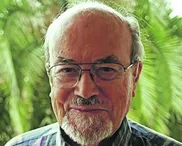
The centenary of John Stott’s birth falls on 27 April 2021. As he died ten years ago, his name won’t be well-known to younger readers. This is one reason why we are holding centenary events, to introduce his name and his legacy to a new generation.
The breadth of John Stott’s influence is remarkable. Aged 29, he was appointed Rector of All Souls Langham Place, next door to the BBC. He wrote years later of how ‘dissatisfaction’ is a mark of a leader, and he showed it himself from early days. Decades before the term ‘fresh expressions’ was coined, he opened the All Souls Clubhouse, a church for the unchurched, in the poorer part of his parish. He started guest services, then unheard-of, beginners’ groups, and training courses for lay leaders. And he was a seer. So international students became a focus in the post-colonial 1960s as newly-established governments began sending their most able to the UK. The list goes on.
Humility
John Stott was listed by TIME magazine in 2005 as one of the 100 Most Influential People in the world. His death was announced on the BBC, and his obituaries given more column inches than would normally be afforded a serving Cabinet minister. Yet his trademark was humility. He spent 40 years living in a small flat, where his bedroom, which doubled as a corridor, housed a desk for his study assistant – a desk which had been rescued from a skip. He favoured simplicity, and would give away anything he hadn’t used in the previous year.
Uncle John, as he was known around the world, founded three movements. The first, with such prescience, was the Evangelical Fellowship in the Anglican Communion (EFAC) in 1961, providing a home for evangelical Anglicans. Its English branch is the Church of England Evangelical Council. The second, Langham Partnership (see Chris Wright’s article); and the third, the London Institute for Contemporary Christianity (LICC) in 1982. Through LICC’s annual ‘Christian in the Modern World’ course, Stott brought together some of the ablest thinkers, many of whom he had got to know as students or as young staff workers with IFES movements. It was invitations to lead university missions which first drew him overseas.
John Stott shaped the university mission as we still know it, with apologetics talks at lunchtimes and proclamation in the evenings. He said his two priorities were ‘students and pastors’ and he never made an overseas trip without a student ministry component.
He was chief architect of The Lausanne Covenant (1974) which would define evangelicalism for the remainder of the century. The Bible Speaks Today series of commentaries were Stott’s idea, bringing a blend of exposition and practical application. He was New Testament Editor of the series. His own books – totalling over 50 – were translated into more than 60 languages.
Julia Cameron, Honorary Director of Publishing, Evangelical Fellowship of the Anglican Communion.
en will be carrying John Stott-related reviews in future months
Centennary Events
• Sunday 25 April
5.30pm All Souls Langham Place: Centenary evening service. Preacher: Chris Wright
• Monday 26 April
1pm and 7pm: The vision continues around the world. Webinar on Langham Partnership’s major ministries: Langham preachers, Langham literature, Langham scholars.
• Tuesday 27 April (John Stott’s birthday)
11am: live from All Souls. ‘John Stott: Pastor, Leader and Friend.’ Main speakers: Chris Wright, Ruth Padilla DeBorst and Ajith Fernando. Some tickets available. info@efacglobal.com
7pm: John Stott’s Life and Legacy. Keynote speaker: Professor John Wyatt on ‘John Stott as Listener’.
For further details see johnstott.org/events
• Premier Radio is broadcasting John Stott’s sermons, and will create podcasts of the following events.
• Recent titles on Stott’s ministry published by Dictum/EFAC, and reductions on classic books at 10ofthose.com/stott