‘…what is unseen is eternal.’
In 375 BC the great philosopher Plato wrote an allegory that has an uncanny connection to the gospel. The allegory describes a group of people who have lived chained to the walls of a cave all their lives. These prisoners see shadows, as objects pass by a fire behind them, and are projected onto the wall of the cave. They name the shadows, but don’t realise that the shadows aren’t accurate representations of the real world. They’re just shadows.
Plato (relating the teaching of Socrates) claimed that a philosopher is someone who has been released from the cave, experienced the captivating sunshine of the ‘real world’ outside the cave, and has come back to try and convince the prisoners that there is a greater and far richer world to be discovered.
Though Christ arrived on the scene 400 years later, it is almost as if Plato was writing about him! Throughout John’s Gospel, he is the ultimate ‘philosopher’ trying to convince his earth-bound hearers that He has come from another world, which is actually the real world (in the allegory, the philosopher is killed by the prisoners!). We are living in the shadows, chained to the limitations of what our eyes can see, needing divine illumination.
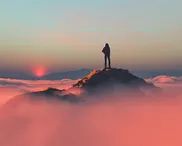
But praise God, our eyes have now been opened by the Holy Spirit, to ‘see’ the world to come – the world of God and angels and ultimate perfection. A world of joy and startling beauty that will never pass away. And the challenge now for us as believers is to recognise that we are living in the shadows and place all our affections on the world to come.
If anything good has come from a global pandemic, it is the reminder that this world, with all its beguiling beauty and temptations, is not what we are living for. The creation itself groans, waiting to be released from its bondage to decay, to share in the glorious freedom of the sons and daughters of God. If we could open a tiny portal into the world to come, where we will be clothed with glory, the excitement would be so great it would put all the joys and troubles of this shadowy existence into their true perspective.
Paul is convinced we can see this world with the eyes of faith. In fact, we must see it, so that we aren’t bewitched by a world that is fading away. We ‘fix our eyes (the Greek verb skopeo can be translated ‘keep thinking about’) not on what is seen, but on what is unseen. For what is seen is temporary, but what is unseen is eternal.’
How excited are you about the world to come? How much do you think about it? How much does it shape your decisions and fuel your worship? Remember that, on your worst day, as you continue to live in the cave with all its frustrations and pain, your chains have been smashed and it’s only a matter of time before you see the sunshine.
Ask God’s Spirit to open your eyes all the wider to the world to come until you see this world for the shadow it truly is, and place all your hopes and dreams, focus all your commitment to godly discipline and prayer and obedience, on the world to come, which is more solid than steel and more beautiful than a starry night – the world where you truly belong!