
Polly Standring shares the remarkable story of global evangelical mission agency Crosslinks, which is now celebrating its centenary.
Crosslinks exists to help people get involved in God’s mission. 27 October 2022 marks our 100th birthday – that’s a century of taking God’s word to God’s world! What God has done through the 1,420 men and women sent out by Crosslinks over the last century is remarkable.
The society began in 1922 as the Bible Churchmen’s Missionary Society (BCMS). The inclusion of ‘Bible’ was key: all members and missionaries were required to uphold the authority of Scripture as God’s word. At the time, this went against the grain of the existing Church Missionary Society. While the BCMS became Crosslinks in 1992, the beliefs of the original founders still stand.
To begin with, Crosslinks concentrated on pioneer evangelism – going to places where other mission societies weren’t working and where the gospel had never been heard.
Myanmar
One of the first missionaries to go out under the Crosslinks banner was A.T. Houghton (see photo below on horseback - left), known as Tim. Having been stationed in Myanmar during World War I, he went back in 1924, with his wife Coralie and sister Eileen, to tell the unreached people there about Jesus. After a few months in the field he reflected: ‘Perhaps the most striking thing is the colossal nature of the task set before us and one’s own insufficiency.’ Tim, Coralie and Eileen began by learning the language, offering basic medical treatment, and leading Sunday services. To begin with the congregation was the three Houghtons, their friend and translator Jamaldin, their house guard Ma Naw and two local women. Numbers steadily grew as word travelled around the region.
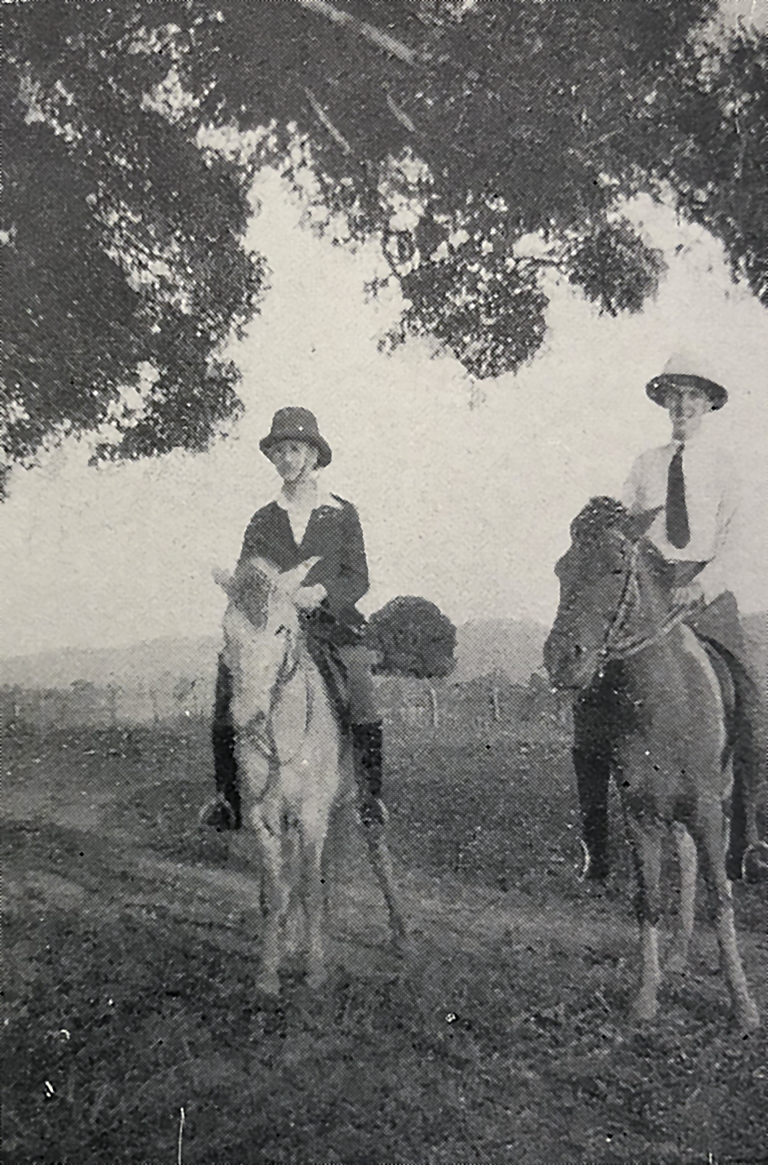
Tim wrote: ‘The medical work rapidly broke down barriers of suspicion. Local people would come in and ask us to visit sick people in distant villages. One visit was to the village of Nshu Kaba, where the father of a woman who attended services was dying of cancer. As I drew near the village I realised this might be the man’s only opportunity of hearing the gospel, and cried to God to use my stumbling words. It was my first attempt at an impromptu preaching of the gospel, but the man seemed to understand as God’s love was explained.’
Over time the group in Myanmar grew, as more Crosslinks missionaries were sent out. By 1930 there were nearly 30, and by 1940 there were 50. A notable addition in 1929 was Maggie, the first (and only!) Crosslinks elephant. She was essential to keeping the line of communication open in the monsoon season, when the valleys were filled with water and mud. She also proved instrumental in carrying the missionaries to safety in India when Japan invaded Myanmar in 1942.
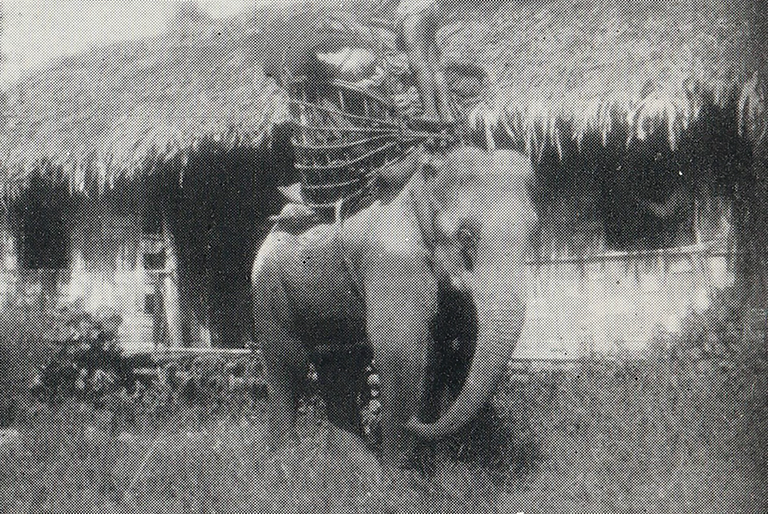
Through the steadfast work of Tim and others, the church in Myanmar steadily grew and a small Bible college was established. By the time the government expelled all foreigners from the country in 1966, a healthy body of believers existed, as well as many indigenous ordained clergy.
The Arctic
In 1925, the bishop of the Arctic appealed to Crosslinks for workers to pastor the isolated and scattered believers in northern Canada. Brothers Arthur and Jack Turner went, taking on parishes the size of England and France combined. They based themselves in villages where local Inuit would come for supplies, but also travelled to where people were hunting (which depended on where the seal populations had moved to). The extremes of cold and darkness made these journeys dangerous – in the winter they wouldn’t see the sun for three months at a time. On one trip, exceptionally bad weather and deep snow meant Jack ran out of supplies for himself and the dogs who were pulling his sled. Clothing, bedding and harnesses were cut up to feed the dogs, ‘but the Lord saw us through and, when we were on our last legs, gave us six deer which got us home.’ On another occasion, two missionaries heading out to the Arctic spent the night on a glacier after their ship was damaged. No lives were lost, but the new recruits watched their possessions sink to the bottom of the ocean as the ship went down.
Despite the challenges, Arthur and Jack served the remote Inuit Christians for many years. Jack reflected: ‘Men sometimes grow impatient at what they consider God’s slowness. But those rest periods are necessary for later fruitage. Nothing of serious import should be rushed.’
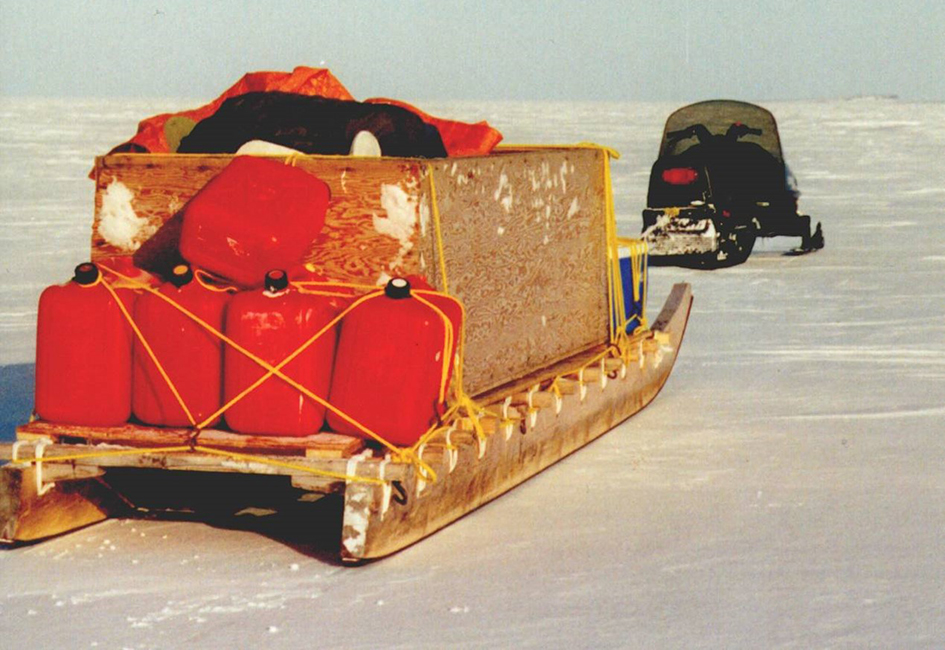
Over 50 years later, Michael and Christine MacLachlan (their snow mobile is shown above) took up the Arctic baton. They moved to Kugluktuk, a tiny town on the north coast of Canada, in 1992. Their parish was the size of Great Britain and their deanery the size of Northern Europe. Michael preached and ran training courses for ministers, and Christine ran the counselling centre. Despite the cold, the 24-hours-a-day of darkness, the hours of travel and huge distances between fellow ministers, the MacLachlans wrote: ‘We believed God wanted us there. Not many people want to go to the Arctic, yet it proved to be just the place for us … We ended up ‘giving’ very little – only receiving. The Inuit are generous to a fault and extremely hospitable. It was a privilege to share their lives for a little while!’
India
By 1930, 143 mission partners had been sent out through the new society. The next 30 years saw 400 more head overseas as work expanded to five new countries. The missionaries’ ministries also broadened. As the gospel became more widely known across the globe, it became apparent that training and equipping was needed alongside frontline evangelism.
In India, Crosslinks workers had shared the gospel with locals since the 1920s. In the 1950s and 1960s, a key need was helping nominal Christians understand more of the faith they professed. Joy Carr shares: ‘We walked hour-long journeys on difficult roads to reach the villages, where I would teach the Bible and do literacy work. We were always conscious of the Lord’s presence and encouragement as we saw signs of people understanding that God loves them when no-one else cared. We saw women with tough lives find joy and hope as they heard and memorised God’s word.’ Elizabeth Johnston was also in India in the 1960s. ‘I learnt so much from my Indian co-workers, seeing how they lived out their faith in very difficult situations. … I remember running a holiday club for local children. My colleague Rev Rahmat gave the most beautiful recital in Urdu of John 21. I have never forgotten it – he made it sound as though Peter and John themselves were telling their experience and we were there with them.’
The second half of the 20th century brought much change as decolonisation led to the scaling down and rethinking of mission work. As Western mission societies slowly left India in the 1950s and 1960s, Indian mission societies took over the work. From 1965, the Indian mission movement ‘mushroomed’ – by 2000, there were over 10,000 Indian missionaries. Chris Wright notes: ‘Mission in India did not end when Western missionaries left. If anything, it has progressed, and we have a lot to learn from Indian missionaries ourselves.’
China
Mission work in China followed a similar pattern. In 1923, China Inland Mission invited Crosslinks to work alongside their missionaries in the unevangelised districts of western China. The gospel flourished throughout the 1930s and 1940s, and spread to the south. But in 1949, mission partners were expelled. Effie Berry, one of the last Crosslinks mission partners to leave in 1951, wrote: ‘It is only in looking back that one recognises there are the joys that follow the tears. We had the privilege of standing alongside our Chinese brothers and sisters, of empathising with them and being able to help Christians in the West know how to pray for China.’ The 25 years that followed saw a crescendo of suppression of religion and oppression of the people, reaching its climax in the Cultural Revolution and Eleven Years of Darkness. Yet the church in China emerged bigger, healthier and more Chinese than it had ever been. Before mission partners were expelled, there were 10,000 missionaries in China and half a million Chinese Christians. Now, there are no missionaries, but 96.7 million Chinese Christians.
As decolonisation, war and the spread of communism shifted the mission landscape in Asia, the number of missionaries there decreased. Some were expelled, others couldn’t enter Asian countries to replace those ending their service and were sent elsewhere. But as doors closed to Westerners in Asia, doors opened in Africa. The 1950s, 1960s and 1970s saw an increasing focus on East Africa under A.T. Houghton’s leadership.
Ethiopia
In Ethiopia, the church dates back to the fourth century AD. The majority of Ethiopians profess to be Christian but the Orthodox Church is steeped in tradition and services are conducted in a language most Ethiopians cannot understand. The first missionaries concentrated on training church leaders and by the end of 1935, 12 Ethiopian men had been taught to read and teach the Bible in Amharic – the language spoken by most people. They went to the cathedral in Addis Ababa and preached the Bible in a language people could understand to the hundreds who gathered.
This training ministry continued until 1937, when the Italian invasion of Ethiopia forced all missionaries to leave. Heart-wrenching though it was to leave behind deep relationships, growing churches and years of language learning, the work in Ethiopia prior to 1937 wasn’t wasted. Mission partners laid strong foundations on which the Ethiopian church continued to build.
When Ethiopia was liberated in 1948, work resumed and a Bible school began. From there, students were sent out to villages across the country to read the Bible, preach and distribute Gospels. Alongside this, missionaries and Ethiopian Christians began translating the Bible into idiomatic Amharic. When Colin Maunsell arrived in 1961, his aim was to assist with this fledgling translation work. Colin worked on an Amharic Bible dictionary and Bible study materials. He travelled around the country in his ‘book van’, selling Christian literature among the villages. At night he slept in his tent, keeping a watchful eye out for thieves. Throughout his time on the road, Colin sold over 100,000 books.
War in Ethiopia meant Colin left in 1979, but he returned in 1991 with his wife Hazel. Hazel shares: ‘We can now see that the many years of faithful sowing by those who laboured in the past – through preaching, teaching and Christian literature ministries – have led to new life. This has been spreading in ever-increasing surges of growth until it is now nationwide!’
Tanzania
In 1954, a call came from Tanzania: men and women were needed to equip local church leaders. The number of Christians in the central region was doubling every seven years and a new church was planted every week. 107 missionaries were sent out over three decades. John and Anne Hayden distributed Christian literature to churches in the 1960s and 1970s. John wrote: ‘There are first-class books written in the local language, but just one Tanzanian and three missionaries are involved in distribution for the whole country. Our aim is for people to sell literature in every community – who better to do that than the pastors, lay evangelists, doctors, nurses and other Christian workers? My job is to train people to use literature and help the dioceses organise distribution schemes. The task is enormous and so is the territory – Tanzania is seven times the size of England.’
A few years later, Ian and Fiona Enticott took up the baton of training Tanzanian Bible teachers for leadership and outreach ministry, especially with Muslims. ‘When we arrived, many new churches were growing with a largely untrained leadership. The church leaders found that raising sufficient money to pay for ministry was a constant problem. We went to teach lay leaders in the Bible school and to assist in the development of a Theological Education by Extension programme. Many of those we taught have gone on to further studies and are now pastors and teachers themselves. We learned much about the power of prayer while we were there, and about God’s sustaining power and protection.’
Kenya
Tanzania is not the only East African country with a historic Crosslinks connection. Bob and Eileen Beak arrived in Samburu, Kenya in 1956. Bob’s brief friendship with Ramri, a Samburu warrior, allowed Bob to share the gospel with him. Ramri became a Christian but died a month later in hospital. ‘It’s all right,’ Ramri told Bob from his hospital bed. ‘I am going to die, but I know that God has made a way for me to have life with Him forever in heaven, through what Jesus did for me when he was put to death. I am forgiven.’ At Ramri’s funeral, Bob preached the gospel of Jesus so powerfully that the clan leaders asked Bob to send them ‘Ramri’s message’ and the Suguta Lolmarmar church was planted.
Bob also planted a church in Merille, on the Marsabit road, north of Samburu. While Somali bandit raids stopped that church, Crosslinks’ connections with north Kenya continued. Today, Marsabit Diocese is the size of England in a Muslim-majority region, yet has only 18 trained clergy. Crosslinks supports Jomo Nderitu, the diocese’s youth worker, who is responsible for the 53 churches spread across the huge region.
Uganda
Uganda has a similarly long history with Crosslinks – the gospel first came to Karamoja, north-east Uganda in 1929. Untouched by previous mission work in Uganda, Karamoja was remote, arid and fraught with tribal violence. Steadily, a group of missionaries grew, focusing on schools, hospitals, Bible translation and church ministry. Brian Herd joined in 1961 as a travelling preacher and bookseller. He became field secretary in 1964, responsible for ministering to missionaries and training local Karamojong Christians as evangelists and pastors, and became later the first bishop of the Diocese of Karamoja, before an untimely exit in 1977.

Ruth Deeth arrived in Amudat Hospital, Karamoja in 1965. She joined fellow missionaries Lillian Singleton and Peter and Liza Cox, alongside Timothy and Mary Slessor Oluoch, missionaries from the Luo tribe in Kenya who pastored the church in Amudat. After being arrested and deported in 1975 under Idi Amin’s dictatorial regime, Ruth returned to East Africa the following year, this time to Tanzania. She spent ten years teaching students at the Bible school in Mwanza to use cassettes to share the gospel with remote and illiterate village communities, and finally returned to England in 1990.
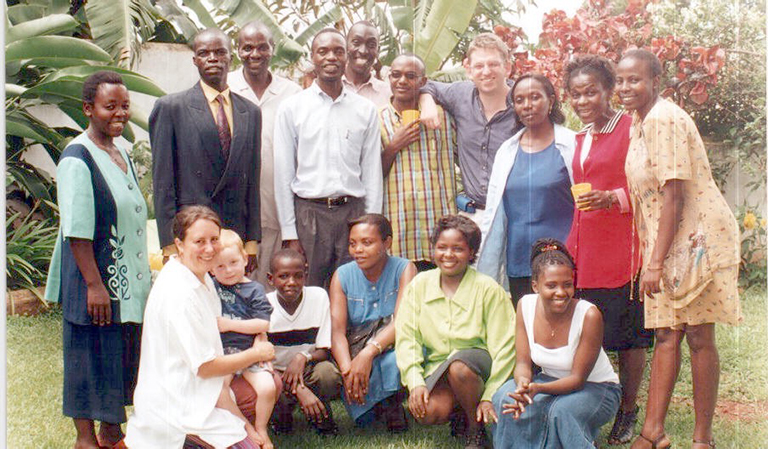
Eleven years later, Mark and Rachel Meynell (pictured above with a class from KEST) arrived in Kampala. Mark taught Biblical studies and preaching at Kampala Evangelical School of Theology (KEST), Uganda’s first Ugandan founded interdenominational college. In 2001 the student body was tiny, but by the time the Meynells left in 2005, it had grown to 50. The school drew students from East and Central Africa: refugees from the Congo, Sudan, Ethiopia, Rwanda and Burundi trained to be faithful Bible teachers and church leaders in a context where the prosperity gospel was never far away.
Spain
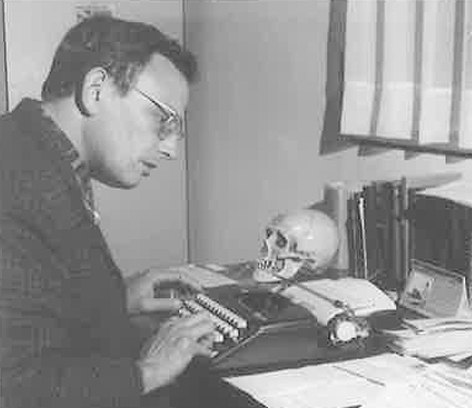
But, while gospel opportunities flourished in East Africa, the 1970s saw a clampdown on foreign missionaries in North Africa. In response, many Crosslinks workers relocated to southern Spain. Gordon (see photo below) and Yvonne Fyles joined a team of Bible teachers, evangelists and technicians who used radio broadcasting to reach Christians in North Africa. Gordon taught Search the Scriptures by correspondence, sending course material across the Straights of Gibraltar. Yvonne was the voice of the Christian radio station, sharing gospel messages three times a week in multiple languages.
Morocco
As the Moroccan Government expelled foreigners and prohibited their activities, Joyce Pitcher and Ann Fleming managed to remain. They relocated from Demnate to Rabat in 1969, and spent the next 22 years nursing, delivering babies and quietly helping plant churches amongst the expatriate and Moroccan communities.
The West
From the 1970s on, a shift in mission happened. As indigenous churches grew, flourished and trained their own missionaries, the increasingly secular West began to be seen as a mission field by the Global South. The renaming of BCMS to Crosslinks in 1992 reflected this: it is the cross that links Christians across ethnicity, race, language, culture and tradition. Crosslinks equips people to send God’s word to God’s world, ‘from everywhere to everywhere’ (to quote an old Crosslinks strapline!).
Crosslinks also recognised the need to train national leadership for the future – to effectively work itself out of a job in any given area! Relationships were established between Crosslinks and theological institutions around the world. The Bursaries Enabling Strategic Training (BEST) scheme grew out of this and still supports study partners today.
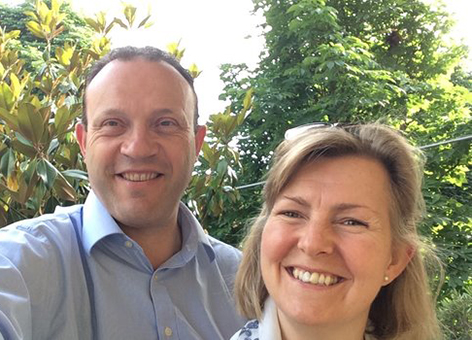
The shift of mission from the West’s responsibility to desperate need was further underlined in the 2000s, with a refocusing on prioritising gospel proclamation. Research showed that the poorest and neediest countries had the fastest-growing churches, whereas richer and healthier countries had very few – and so, although expensive and seemingly contrary to expectations, this was where mission partners were needed most. In 2012, on the 90th anniversary of Crosslinks, the call went out for volunteers to go to Europe. Fifty-one mission partners responded, moving to lead churches, teach in Bible colleges and run frontline evangelism initiatives in European countries from Moldova to Italy (JP and Sue Arunzula - see photo below).
The impact of Covid-19 has been significant and its effect are still rippling throughout Crosslinks. In-person visits are only just getting back up to speed. Many mission partners felt stymied and exhausted as teaching, churches and evangelism moved online. Some mission partners are still struggling to return to the UK on home leave. Many churches and colleges are only just beginning to meet in-person again. The knock-on effect on funding has been felt.
Yet as we celebrate 100 years of God’s faithfulness to the 1,420 mission partners sent out, we step forward in faith, not by sight, as the 36 founders did in 1922. We continue to see encouragements of the gospel at work as people across the world believe in His name. The future is no less uncertain, yet our God is certain. It is to His world we go, bearing His word and trusting Him to grow the seeds that are planted.