There are some genuinely shocking scenes in the Old Testament that leave you with more questions than answers.
I have been working my way through early Leviticus, trying to assimilate the details of the various sacrifices, and grasp Aaron’s fashion sense. And then I came across the shocking story of Nadab and Abihu, and it is still troubling me!
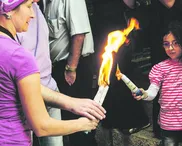
Here is the passage: ‘Now Nadab and Abihu, the sons of Aaron, each took his censer and put fire to it and laid incense on it and offered unauthorized fire before the Lord … and fire came out from before the Lord and consumed them.’ (Lev. 10:1-2) Clearly Nadab and Abihu did something seriously wrong, but did they deserve to be consumed by fire?
When you get to 1 Samuel, Eli’s sons are judged by God, but that was over wicked behaviour that lasted a long time – sleeping with prostitutes and trivialising worship. Nadab and Abihu seem to have been struck down instantaneously, over one misdemeanour, which appeared to have been a simple matter of memory loss amid the many complex instructions God was handing out to the first family of priests.
Of course, as usual, there is more to the story than meets the eye. The way Nadab and Abihu added their incense was similar to the way pagans offered sacrifices to their gods. This wasn’t just a slip of the censer. Nadab and Abihu were bringing pagan worship practices into the very heart of tabernacle worship. It’s a bit like a preacher standing up at church on Sunday and starting with ‘Blessings in the name of Mohamed’! This was not a small sin! But still, instant death for that?
To add to the sin was the fact that these were Israel’s leaders, the very men God had set apart to bring His people into His presence. They should have been fully aware of the high stakes of their role. That the sins of a leader were more damaging than those of a regular Israelite is shown by the fact that a priest had to offer a bull for forgiveness of sins, the same size of sacrifice that cleansed the whole nation. Every sin matters. But the sins of leaders matter more, as recent church abuse stories remind us. But still, instant death, before the sacrificial system had even got going? And to add to the shock factor, Aaron is told not to publicly grieve for his sons (v.6)!
It is noteworthy that there is a shocking story at the beginning of each new move of God. In Leviticus 10, at the beginning of tabernacle worship, Nadab and Abihu are consumed. 2 Samuel 6 recounts Uzzah the Levite dropping dead for touching the ark when David was attempting to bring the sacred chest into the Jerusalem temple for the first time.
And in the New Testament, as the early church is filled with the fear of God following Pentecost, Ananias and Sapphira also drop dead for lying to the apostles (Acts 5). At the beginning of each new move of God, a shocking story underscores the truth that God is holy, frighteningly holy, uncompromisingly holy. Holy enough to make leaders drop dead for flouting His holiness.
I am still shocked by this story, even if I can see a theological rationale for it. But maybe that’s the point. I ought to fear the Lord. I ought to be in awe of His holiness. As a Christian leader I carry holy things, I talk about holy things, I represent the Holy One. And there are moments I need to be shocked and learn to tremble again, lest I trivialise His glory!
Indeed, it could be said that much of the compromise and apathy in the UK church today emerges from the fact that we have forgotten how to tremble. And we need a shock, even one that leaves us with a host of question marks about God’s love and grace, to remind us that God is not a doting grandfather. He is a ‘consuming fire’ (Heb.12:29). And trembling is appropriate if we want the train of His robes to fill our temple (Isa.6:1-5).