LIBERTY IN THE THINGS OF GOD
The Christian origins of religious freedom
By Robert Louis Wilken
Yale University Press. 236 pages. £18.99
ISBN 978 0 300 226 638
Robert Louis Wilken is an outstanding church historian. Ordained as a Lutheran, converted to Catholicism in later life, and now 82 years old, Professor Wilken has turned his considerable intellect to the Christian roots of liberty.
Wilken wants to show that religious freedom is a Christian idea, not something Enlightenment rationalism thought up to contain violent conflict between faiths. His book is a welcome work of scholarship with new insights for the well informed, and an accessible introduction for others.
In the Roman world, religious worship was an act of civil solidarity. Then Tertullian proposed an extraordinary idea – ‘religious liberty’. Christians were guided by conscience, subject to the word of God as revealed in the Bible. But all could worship as they chose, without the menace of political and economic bonds.
At first, after seizing Rome in AD 313, Constantine granted and upheld religious liberty. Then the church swelled in power and privilege as emperors made Catholic Christianity the official religion – ‘Christendom’ arrived. Catholic theology upheld some liberty. The ‘two swords’ doctrine took Luke 22:38 to mean the authority of the Church in spiritual matters was separate from the civil authority of the state. The idea of ‘conscience’ entered Catholic teaching, so none need obey the Church if conscience led otherwise.
When the Reformation arrived, only the brave disputed the conventional wisdom that no community could have ‘two religions’ – so the state (often the city council) must decide whether to endorse and enforce the old or the new ‘religion’. Wilken writes movingly of the nuns of Nuremberg, whose diaries record them fleeing from Mass sung in German, then compelled to listen to 111 Lutheran sermons (overseers removed wool stuffed in their ears) and to cut up, dye and re-make their habits. Through such tales, Wilken brings to life a story of many local struggles.
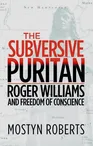
Dissenting Anabaptists held that true churches were congregations of believers choosing their own leadership, and the state should have no say in matters of faith. They were killed or banished in large numbers. Menno Simmons led pacifist Anabaptists to shelter in tolerant Holland. Puritans chased out of England under Elizabeth also found a haven in Holland, where English separatism was nurtured and Thomas Helwys turned Baptist. His Short Declaration of the Mystery of Iniquity (1612) was the first book in English to advocate religious freedom for all, including heretics, Jews and Muslims. The Baptist strain in English separatism is a key part of Wilken’s story. When the radical New England Puritan Roger Williams came to London in 1643 to win Parliamentary consent for his experiment – democracy in Rhode Island, with full religious freedom for all – the market was ready for his astonishing series of books appearing over a few months, culminating in The Bloudy Tenent of Persecution for Cause of Conscience. Williams is a central figure (Mostyn Roberts’ welcome new biography from Evangelical Press was reviewed in the December 2019 issue of en).
When the English revolution removed King Charles’s head, John Owen preached to Parliament, then published an appendix on state and religion. Liberty was not a privilege, but ‘necessary unto human nature’. For Penn, religious freedom was ‘our Right by the Law of God’.
Locke made it his project to ‘distinguish exactly the business of Civil Government from that of Religion, and settle the just bounds’. Wilken illuminates the influence here of Puritanism and of thinkers from Tertullian to Helwys. When revolutionary Americans drafted the Bill of Rights, Madison deleted a section affirming religious ‘tolerance’. The new text spoke of equal entitlement to the full and free exercise of religion.
Now we have to defend religious freedom in an age where nominal Christianity is a minority position. Wilken helps us understand that equal rights for all is an idea with deep Christian roots.