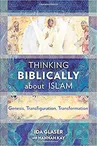
A diverse, packed meeting in Oxford during April saw the launch of a book, Thinking Biblically About Islam.
Arguably, few concerns are more vital, given Islamic State terrorism, the murder of an Ahmadi in Glasgow by a Sunni, intensifying Muslim outreach towards Christians and others, and the election of a Muslim as Mayor of London.
The author, Ida Glaser, asked, with characteristic humility, that if anyone could do better (to answer how to think biblically about Islam), ‘please do!’. Her central point was that Islam was a reversal of the Transfiguration – where the Law, represented by Moses, and the Prophets, by Elijah, find their climactic fulfilment in Jesus, something Islam rejects. She asked whether we could move beyond the trauma of events (like the Lahore bombing) from forgiveness to celebration of survival.
The book was commended by a number of speakers, such as the Muslim author Shabbir Akhtar, who complimented Ida on her ‘generous’ assessment of Muhammad, and Michael Nazir-Ali, who gave an excellent talk on the differences between Islam and Christianity, for example, that Christians engage with Source Criticism, whereas Qur’anic advocates cannot, as well as considering bridge-building in the face of the shari’ah.
Ida’s book is very accessible and clearly aimed at both Christians and Muslims, giving extensive elucidation of the beliefs of both. On the other hand, at times it can be too generous. For example, p.20 refers to Genesis 1–11 and God’s plan to bless ‘all peoples’ – defined as ‘Muslims, Jews, Christians, Hindus, Sikhs and everyone else.’ Unless we qualify this as meaning conversion from these other faiths to Christ, this is open to misunderstanding – and surely by ‘peoples’ the emphasis is on nationality, rather than religion? Again, p.32 deals with the Islamic denial of the need for sacrifice by presenting Muslim concern to obey God as ‘offering oneself to God’. Surely this is too wide; ultimately, it is by the actual sacrifice of Christ that we are saved.