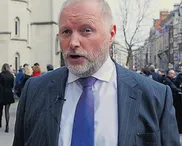
On March 26, two days after World Vision in the USA had announced that it would employ Christians in same-sex marriages, the relief organisation reversed its decision.
World Vision’s American branch had announced, on March 24, that it would no longer require its more than 1,100 employees to restrict their sexual activity to marriage between one man and one woman. World Vision president, Richard Stearns, made it clear by saying: ‘The new policy will not exclude someone from employment if they are in a legal same-sex marriage’.
This caused an outcry from Christian leaders and churches. Many donors said they would no longer fund the sponsor-a-child programmes.
The World Vision US board then changed its mind and issued a statement in which Richard Stearns said: ‘Today… the board acknowledged they made a mistake and chose to revert to our longstanding conduct policy requiring sexual abstinence for all single employees and faithfulness within the biblical covenant of marriage between a man and a woman…
‘In our board’s effort to unite around the church’s shared mission to serve the poor in the name of Christ, we failed to be consistent with World Vision US’s commitment to the traditional understanding of biblical marriage and our own Statement of Faith which says, “We believe the Bible to be the inspired, the only infallible, authoritative Word of God.”…
‘We are brokenhearted over the pain and confusion we have caused many of our friends, who saw this decision as a reversal of our strong commitment to biblical authority. We ask that you understand that this was never the board’s intent’.
Resignation
Two days later, a member of the board, Jacquelline Fuller, resigned in protest over the reversal. Fuller, who is also director of corporate giving for Google, said that she remained a ‘huge fan’ of World Vision’s work on behalf of the poor but that she had resigned as she ‘disagreed with the decision to exclude gay employees who marry’.
World Vision is a leading charity in America and took in over a billion dollars in 2013 and serves over a 100 million people in 100 countries.