letter from Ethiopia

Historically, the Anglican presence in Ethiopia has been tiny, with over half the country’s 110million people owing allegiance to the ancient Ethiopian Orthodox Church, while a significant but growing Protestant minority belong overwhelmingly to Pentecostal and Evangelical churches.
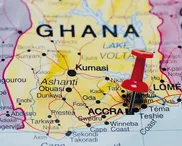
But there is a different story in Gambella, a town and region in the westernmost part of Ethiopia bordering South Sudan which I was privileged to visit recently. Here, there are some 150,000 Anglicans, predominantly ethnically Sudanese Ethiopians whose numbers have been swollen in recent years by South Sudanese refugees. The strength of this church has been recognised by the formation of the Diocese of Gambella as one of the four constituent dioceses of the new Anglican Province of Alexandria launched in October 2021.
The great need of this new diocese is for the training of catechists (lay ministers) to keep pace with rapid growth, and a three-year programme has just begun based at St Frumentius Theological College in Gambella to train 120 catechists.
My visit coincided with a clergy retreat designed to familiarise some 60 pastors with the catechist training programme. We were introduced to the training material that will be used for the catechists’ course by the Revd Sammy Atsali, a Kenyan who has been seconded to St Frumentius by CMS Africa; and Professor Ashley Null, a leading authority on the English Reformation and Chairman of the Board of the Alexandria School of Theology, spoke about the relevance of Archbishop Thomas Cranmer and the Book of Common Prayer for Anglican ministry today.
The Sudanese community is made up predominantly of two tribal groups, the Nuer and the Anuak, who share a long history of hostility, but during the retreat it was very clear that a deep work of reconciliation is taking place within the Anglican church. This is a diocese with a bright future; it not only teaches the gospel faithfully, but also demonstrates its reconciling power in a deeply divided culture.