

The Lambeth Conference is supposed to be a once a decade gathering of all the serving bishops in the Anglican Communion. Susie Leafe writes:
An opportunity for the ‘mind of the Communion’ to be determined through discussion of lengthy reports and votes on morally-binding ‘Resolutions’ that could be amended and debated.
The 15th Lambeth Conference took place in Canterbury this summer. It was marketed as a chance to show that the Anglican Communion was ‘Walking Together’ as ‘God’s Church for God’s World’.
It was four years late. The Archbishop of Canterbury could not call one in 2018 because the sanctions imposed by the Primates Meeting in 2016 would have excluded those churches that had accepted same-sex marriages. He planned for 2020, but Covid caused further delay.
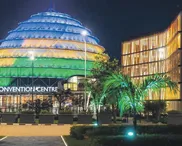
Almost a third of the bishops invited refused to come. Bishops from a number of countries including Australia, Kenya, Rwanda, Uganda and Nigeria turned down the invitation – as they were unwilling to be seen to be in fellowship with bishops that upheld false teaching.
Other orthodox bishops chose to come in order to uphold orthodox teaching, most importantly they wanted to see Resolution I.10 (Marriage and Sexuality) from the 1998 Lambeth Conference re-affirmed.
The Conference was designed to avoid controversy – there were to be no ‘Resolutions’, instead, the bishops were given very little notice of lengthy ‘Lambeth Calls’ – an hour or so to discuss each one in small groups and provide written feedback – and then, after the first Call was voted on electronically, (revealing that fewer than half the bishops present had affirmed it), the process of choosing changed and affirmation of the Calls (on the basis that feedback would be considered) was basically presumed.
When it came to the most divisive issue – one which has torn the fabric of Communion for more than 20 years – the rejection of Biblical authority by blessing same-sex unions – no dissent was allowed. In what a bishop from Canada, described as ‘a masterclass in change-management’, Justin Welby appeared to take the heat out of the debate by refusing to allow any ‘vote’ and by accepting both Lambeth I.10 and that ‘other provinces have blessed and welcomed same-sex union or marriage, after careful theological reflection and a process of reception’. No wonder one bishop from South Sudan described being ‘confused.’
If it were not for the leadership of the Global South Fellowship of Anglican Churches (GSFA), it is likely that most orthodox bishops would still be confused. After all, there is no final ‘Lambeth Conference’ statement, no agreed doctrine, no single way forward. Even the Archbishop of Canterbury had to admit in a press conference that the GSFA had made clear they were not ‘Walking Together’ with those who have gone against Scripture.
But there was an 11-page Communique from the Global South Fellowship of Anglicans, along with their own Lambeth Call. Both are available on their website, and both are worth reading in full. They are Biblically orthodox; gracious but authoritative. As those who register their ‘collective ownership and stewardship of a Communion that in God’s grace has become worldwide’, they call for repentance and the resetting of the Anglican Communion. They are clear that, ‘In the words of Elijah, the Communion cannot afford to “go on limping between two different opinions” (1 Kings 18:21)’ and they say: “We will find ways to be mutually accountable to one another as orthodox Provinces in staying true to the word of God. We want to express enhanced ecclesial responsibility as a global body of faithful Anglican Provinces and ten dioceses. With common doctrine on essentials and mutual accountability, we anticipate more synergy and joy in living out our faith and being Christ’s witnesses to a watching world that is lost and grappling with pain and hopelessness.”


‘Power is a powerful drug and the detox process is hard’
One of the most insightful speeches at the Church of England's General Synod in July came from The Revd Lindsay …