letter from Brazil

A deeply divided Brazil is going to the polls to choose its future president – hopefully putting an end to a combative campaign between two candidates: Jair Messias Bolsonaro (67) and Luiz Inácio Lula da Silva (76).
Lula entered the first round as the favourite, with opinion polls indicating a dominant lead in the first round. But the strength of Bolsonaro’s support and the close result dashed expectations of a quick resolution to the deep polarisation in the world’s fourth-largest democracy. The run-off between them takes place on Sunday October 30.
Bolsonaro challenged the results that showed his loss to Lula in the first round, arguing that they did not capture the enthusiasm of the population he observed throughout the campaign. Despite the gap of five percentage points to the first-placed Lula, Bolsonaro’s strength swelled in the second round, along with his party which gained significant influence in Congress this election, winning 19 of the 27 seats up for grabs in the Senate, and building on a strong base in the Chamber of Deputies.
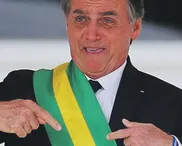
Bolsonaro
A self-ascribed Catholic, Bolsonaro has the support of the vast majority of Brazilian Christians, who helped him reach the second round of elections. Evangelicals and Catholics represent one in three voters in the world’s largest Catholic country, and more than 20% of its federal lawmakers. Many were captivated by Bolsonaro’s appeal with a hope against far-left legislative efforts to legalise abortion, drugs, gambling, and gender ideology. They believe Bolsonaro is a force against the unprecedented corruption that has marked the Workers’ Party’s 15 years of rule.
On the other hand, Bolsonaro is accused of neglecting the fight against Covid and for not delivering the privatisations that were expected of him as a representative of economic liberalism in the executive branch. Despite this, most conservatives applauded several of his measures, such as support for pension reform and free market policies. His supporters say this election has undoubtedly been like a fight between David and Goliath. They claim that the far left has gone too far, with a proposal to indoctrinate schoolchildren about sexual orientation, which has irritated many parents as well.
With the motto ‘God, homeland and family’, Bolsonaro has the support of his base – Protestant and Catholic Christians – maintaining rigidity regarding national security and the powerful agribusiness sector. He participates in prayer meetings held by evangelical pastors at their Congressional offices in Brasilia. Evangelical volunteers responded by distributing flyers outside of churches and speaking about Bolsonaro to friends and neighbours. This has been key to his low-budget campaign, whose political party has little exposure and, as a result, has limited advertising time on radio and television. Nevertheless, he receives nearly five times the support of evangelical voters than the far-left candidate.
Bolsonaro claims that the militaristic government of 1964–1985 was necessary to protect the nation against Communism. He has responded to public outrage over rampant corruption and rising crime. He wants to loosen gun laws so that law-abiding Brazilians can protect their families and property. He also supports empowering the police to reduce violence and crime.
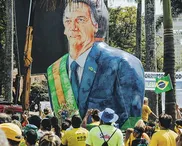
Bolsonaro also asked his supporters to dress in the green and yellow colours of the Brazilian flag on voting day to demonstrate the population’s decision in case there was any fraud with the electronic voting system. A sea of green and yellow was seen on the streets on election days, far surpassing the group wearing red with the star, a flag used by voters on the far left.
Lula
At the other end of the political spectrum, Lula ran for president three times before succeeding in 2002. In his second term, he implemented the Growth Acceleration Program (PAC), an investment programme meant to solve many of the problems holding back the Brazilian economy from growth. Before taking office, Lula was a trade unionist who gained much popularity for his appeal to social policies in favour of the poorest. Its main agendas have always been associated with the promotion of rights for minorities and in favour of an interventionist state in which most economic growth is financed by public money.
Lula rose from poverty to the presidency and is credited with building an extensive social welfare program during his 2003–2010 term that helped lift thousands of people out of poverty. But he is also remembered for the massive corruption scandals that have involved politicians and business executives in his government. Lula’s convictions for corruption and money laundering landed him 19 months in prison. However, in 2019, the Supreme Court, still composed of some people appointed by him, overturned the convictions on the grounds that the process took place in a non-competent forum. In other words, Lula was tried outside the crime scene. This annulment allowed him to run for president this year. However, the overturning of the conviction did not imply that he was not guilty. So, while Lula left the presidency 12 years ago with record popularity, he is now disliked by many Brazilians.
In a country where the left and the right are equally vibrant and antagonistic, the next president’s biggest challenge will be to unite a country under the same flag. May God bless Brazil!