Geographically and physically, the region of Pamir in Tajikistan is an area of outstanding beauty.
The Pamir mountains are lofty and lonely, one of the last ‘undiscovered’ regions on earth, and one of the ‘world’s best kept secrets’ according to a former British ambassador to the country. The average height of the mountains in the eastern Pamir region is over 20,000 feet above sea level.
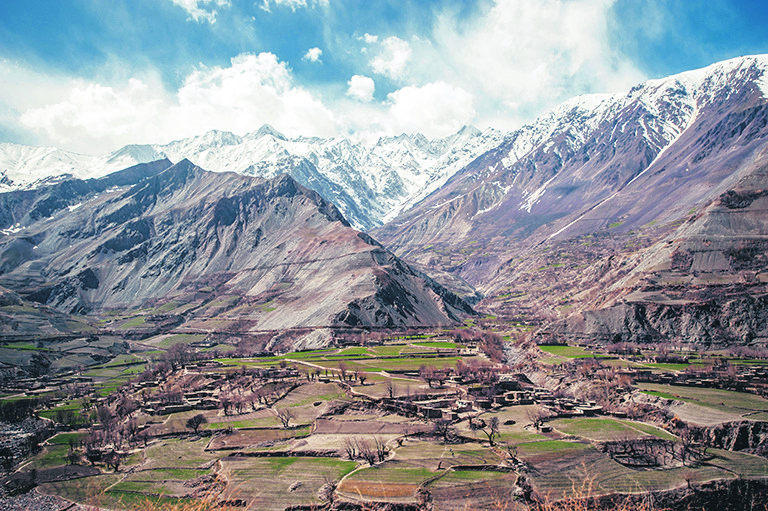
(photo: www.imb.org (CC4)
It is a truly majestic landscape, but its inaccessibility presents acute problems for communication, for its inhabitants live in isolated and scattered communities which have few, if any, visitors. The people of the Pamir region have their own distinctive customs and traditions. There is a distinctive Pamir dialect, and some speak only this. They do not know Tajik or Russian. Although officially Tajik, the history, religion, and lifestyle of the inhabitants set them apart in some important respects from the more western parts of the country. For a start, Pamir is located in the autonomous region of Gordo-Badakhshan which has its own local government.
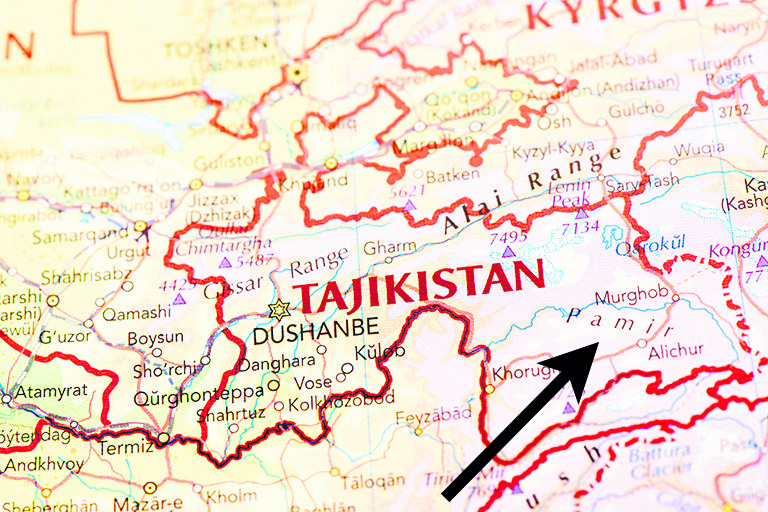
During the civil war in the early 1990s, the region declared itself independent, and became a bastion of opposition to the regime in Dushanbe. Later it retracted its claim of independence, but retains a significant degree of autonomy within Tajikistan.
Thirty-nine people groups are represented in the nation, of which 31 are believed to be unreached with the gospel. In the Pamir language group alone, there are up to a dozen distinct languages and dialects reflecting the diversity of ethnicity in the nation as a whole. The predominant religion is Islam making up around 98% of the population. Followers of Islam fall into two groups, the largest by far being Sunni, and the much smaller group Ishmali Shi’ite, which is predominant in the Pamir region. The rest of the population comprises mainly Russian Orthodox adherents, some Roman Catholics, and tiny communities of evangelical believers.
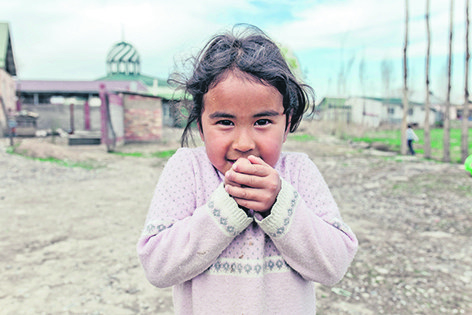
(photo: Laura Evans on Unsplash)
From the perspective of missionary endeavour, the task in Pamir is daunting. The accumulation of barriers such as geography, diverse ethnicity, multiplication of languages and dialects, and the intimidating influence of Islam, initially presents a discouraging picture. Will the good seed of the gospel ever find prepared soil into which it might fall? The answer is ‘Yes’! Even in areas where previously there were no known believers, God is at work. Slavic Gospel Association (SGA), with its mission partners, has been burdened to reach out to these unreached communities.
Within a remote region of Pamir there is a small settlement of about 1500 Arabs – a ‘forgotten’ community – ‘a leftover from ancient times’ was how one commentator put it. A young man from this settlement – we will call him Iske, not his real name – visited a church in a large city, heard the gospel, and was converted. He asked the brothers to travel to his home settlement to share the gospel with his friends and family. He was persistent, pleading with them to make the long and difficult journey to his home settlement. So they went, and their report makes thrilling reading:
‘For our visit to Iske in September 2020, he had invited ten of his relatives and friends and we shared the gospel with them. All of them were listening with great attention and asking questions. Right there, his mother prayed to Christ for salvation. Iske said: “I want my house to become a House of Prayer for all nations!”
We also met Cha. Iske said: ‘I assume he is a believer too, because I heard him arguing about Christ with the local Mullahs.’ Cha told us that he indeed is a believer in Jesus Christ. He had come to faith by watching Christian TV programmes in the Iranian language. … It turned out that, although both Iske and Cha lived in the same settlement, they did not know of each other’s search for Christ. Cha did not even have a Bible. We brought one and gave it to him as a gift. He took it with hands trembling with reverence, holding it tight, thanking us over and over again.’
Iske’s desire that his house become a House of Prayer has been fulfilled. He made a room in his house available for meetings, and today there are two families and some other interested people who attend. Church leaders take it in turns to make the arduous journey to Iske’s home to teach and instruct in God’s Word. Their visits are eagerly awaited.
Gospel outreach into this spiritually dark region calls for godly wisdom and sensitivity. Barriers of suspicion and antagonism have to be dismantled, and SGA, with its partner, Bibel Mission, has been guided and directed by God in approach and activity. One part of the long-term strategy will, God willing, involve the building of ‘Hope Centres’ in several impoverished and vulnerable communities. These Hope Centres provide food and accommodation for individuals and families in need, offer hygiene facilities, and provide basic education for children. They serve as ‘safe places’ for some who are escaping abusive and violent circumstances. In them the gospel is shared in word and deed, and God has blessed the believers’ efforts. Unbelievers have come to faith and small churches have been established. One church leader wrote of their strategic importance:
‘Hope Centres will be an expression of the unconditional love of Jesus Christ and will be an enormous opportunity for good relationships and sharing the gospel. [They] will provide shelter and help to children in need and also be a base of operations for the missionary outreach ministry to the Pamir nation.’
Another bridge-building strategy which creates opportunities to share the gospel is the involvement of believers in local affairs and community projects. Recently we received a report from a missionary leader about the impact made by believers in a regional town within Pamir. The local government school had asked for their help in a construction project, and led to the testimony of the town’s believers being powerfully presented in the most practical of ways. They laboured for almost three months to refurbish the school’s assembly hall and prepare a new sports field, and their outstanding contribution to the project was acknowledged by the community leaders. The town was stirred by this evidence of the gospel in action, and people who might never otherwise have had opportunity heard about the Lord Jesus and His love for them.
An SGA-sponsored missionary, Sergey, has been involved in planting a new church in a town previously unreached. The work has been slow and difficult, but he reports with joy that after three years they now have two believers and ten who are seeking and open to the gospel. Sergey also visits eight mountain villages where about 20 families in total are open to the gospel. What faith and persistence are called for to continue to reach out to such isolated and hard places! We rejoice with Sergey and others ministering in Pamir, that the gospel can and does overcome all barriers, and that the Lord Jesus Christ is glorified in the unceasing growth of His church.