
Are you suffering for 'doing good'? Read Peter's words

Tim Vasby-Burnie
A calling from God is a noble, exciting, and gracious privilege.
Peter tells people who once lived in ignorance, who were led by evil desires, that they are called to be holy, like God (1 Peter 1v15-16). He builds up the church by telling them they have the honour of being called out of darkness into God’s wonderful light (2v9).

the ENd word
'New every morning'

Femi Adeleye
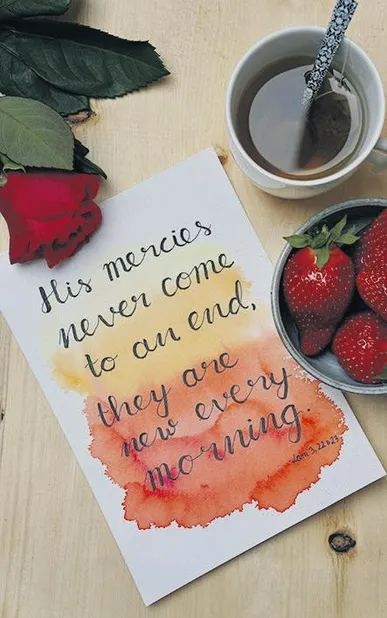
“Through the LORD’s mercies we are not consumed, because his compassions fail not. They are new every morning; great is your faithfulness” (Lamentations 3v22-23).
The context for many in today’s world may not be as devastating as the destruction of Jerusalem that provided the basis for Jeremiah’s Lamentations. Following its desolation and captivity by King Nebuchadnezzar, people in the context experienced significant suffering and deep sorrow as they faced exile and an uncertain future. It was in that situation of despair that the prophet Jeremiah in his lament provided glimpses of hope rooted in God’s mercies, compassion and enduring love.

Peter's counter-cultural words to slaves
Tim Vasby-Burnie
Who is a "model Christian"? A pastor-evangelist who can both disciple a congregation and reach the lost effectively? A nurse putting in long hours, working with compassion and praying silently for her patients?
Peter says: think of a slave. A slave - with no power, suffering for doing good - is a model Christian.

Have you noticed the endings of these Psalms?

Mitch Chase
The book of Psalms has five smaller books. They’re not equal in length, but the ending of each book is marked by various climactic statements.
Book I is from Psalms one to 41, Book II is from Psalms 42 to 72, Book III is from Psalms 73 to 89, Book IV is from Psalms 90 to 106, and Book V is from Psalms 107 to 150.

John 1: 'A rich and beautiful tapestry of the Triune God'

James Cary
I’m a professional writer (believe it or not) but was one of the few in my school year who did not choose English to study at A-Level.
Back then, reading fiction felt like hard work to me. For my GCSE, I had to read Far from the Madding Crowd by Thomas Hardy. It’s a classic. But it’s long, sad and contains an awful lot of dense and wistful description of the Dorset and Somerset countryside. I now live on the border of Somerset and Dorset – in the heart of Hardy’s Wessex. I love Wessex. It’s where I live. I enjoy seeing the hedgerows, oak trees and starling formations. I am still not hungry for lengthy verbal descriptions of all of the above.

Nunc Dimittis - 'let your servant go in peace'

Tim Chester
Nunc Dimittis, in the New Testament is "a brief hymn of praise sung by the aged Simeon, who had been promised by the Holy Spirit that he would not die until he had seen the Messiah."
"Now there was a man in Jerusalem called Simeon, who was righteous and devout. He was waiting for the consolation of Israel, and the Holy Spirit was on him. It had been revealed to him by the Holy Spirit that he would not die before he had seen the Lord’s Messiah. Moved by the Spirit, he went into the temple courts. When the parents brought in the child Jesus to do for him what the custom of the Law required, Simeon took him in his arms and praised God, saying:

What is the 'good life' for Christians?
Tim Vasby-Burnie
What does the good life look like? What sort of good life can turn the heart of unbelievers towards God?
We are “foreigners and exiles” in this world – what sort of life shows that we belong to the age to come, the kingdom of Jesus? In this dark world, what can we do to shine the wonderful light of mercy we have discovered in Christ?

Overlooked by the world, but purposed by God
Tim Vasby-Burnie
Reports of a "Quiet Revival" have been exciting Christians in recent weeks, yet for the foreseeable future we will continue to feel the deep relevance of 1 Peter to the contemporary church: we are “exiles” in this world (1 Peter 1:1).
As with many of our brothers and sisters across the world, we are a minority in a culture that is suspicious of our faith and all too ready to speak maliciously against the church (1 Peter 3:16, 4:4). Do you feel this yourself?

What did Jesus really redeem us from?
Tim Vasby-Burnie
If a member of an evangelical church was asked, “What are we redeemed from?”, I hope most would answer something like “sin”, “death”, “judgement” or “hell”. All good answers!
But Peter has another answer: “For you know that it was not with perishable things such as silver or gold that you were redeemed from the empty way of life handed down to you from your ancestors, but with the precious blood of Christ, a lamb without blemish or defect” (1 Peter 1:18-19). The exodus and passover imagery is clear.

lessons from Jude
3 ways to respond when your leader falls

Tom Forryan
A new church starts in your city. It seems to be everything a church should be. The lead pastor is full of 'can do'. He has an uncanny ability to relate to young people, with humour, energy and a feel for contemporary trends.
Soon, his alternative-style services are drawing young people from a wide radius. He launches one innovative initiative after another, each one more audacious than the last and each one more spectacularly successful. The feel is that his church is really the only one to be at; and he is the only one who can run it. 'This is where God is at work', people say.

Your inheritance awaits: hope for exiles
Tim Vasby-Burnie
If you are in exile, scattered to a place you do not really call ‘home’, what security do you have? What is there to cause you to praise? What will the future hold? These could be the sorts of questions being asked by those to whom the apostle Peter wrote his first letter.
Similarly, we might feel insecure today. If more institutions become hostile to Christian truths, career plans and thoughts of job security start to fade away. What security is there for ministers and congregations in declining denominations?

the ENd word
Why was Jesus baptised?

Jeremy McQuoid
Why did Jesus get baptised? Have you ever asked that question?
Baptism was clearly a sign of repentance, as John the baptiser spent every day ‘baptising in the wilderness and preaching a baptism of repentance’ (Mark 1:4). His entire ministry involved calling Israelites to a deep, heartfelt repentance, so they could be ready for the coming of Messiah.

Real change starts with the heart

Emma Scrivener
There’s a popular video on social media that perhaps you’ve seen. A woman is given the following scenario by a presenter: 'Imagine we’re in a race. I’m coming second and you pass me. What place are you in?'

the ENd word
Do you listen in order to understand?

Lizzy Smallwood
In my last few articles we are looking at how the apostle James views the ‘respectable’ sins that we allow to take root and grow in us unchecked.
So, on to another of James’ diagnostic tests. I read something recently that hit a nerve: ‘One of the biggest problems with our communication is that we do not listen to understand, we listen to reply.’

Not a stingy God, a God of abundance
Tim Vasby-Burnie
Now and again I will give a recitation of 1 Peter from memory and I know when the first smiles will cross the faces of those listening: when I reach the end of chapter 1 verse 2: 'Grace and peace be yours in abundance'.
'Grace and peace be yours' – this is standard fare for an epistle. 'In abundance' adds a new dimension.

Have we forgotten the joy of obeying Christ?
Tim Vasby-Burnie
We've all had the experience of ticking 'Yes I have read and agree to the Terms and Conditions' as we install new software, take out some insurance or sign up for a new social media platform. Sometimes we are even forced to scroll through the small print before we can click 'Yes' - but do we ever actually read the text?
I did once, when agreeing to a cash-back offer that came with a new phone - I wanted to know exactly when I needed to send the company copies of my bill. It was a hassle, but worth it for the savings.

Am I in the right place?
Tim Vasby-Burnie
'What am I doing here?' 'Are we in the right place?' These could be the questions of a Christian in the public sector, trying to tread delicately but truthfully during Pride month. Or the Christian minister in a church that is resistant to Biblical truth. Or Christians in a village in India actively hostile to the precariously small Christian community.
Peter’s first letter is addressed to 'God’s elect, exiles scattered'. It seems almost a contradiction. To be God’s elect may bring to your mind associations with honour, glory, status, privilege. Exile has associations with shame, suffering, being overlooked or looked down upon. Peter brings both together throughout the letter, right the way to 5:15 where greetings are sent from 'she who is in Babylon, chosen together with you'. Exiled in Babylon, yet chosen, elect.

the ENd word
From fire without to fire within
Jeremy McQuoid
I was brought up hearing the message of salvation clearly and repeatedly, week after week, in such an unmistakable way that classic gospel texts like John 3:16, Romans 3:23 and 1 Timothy 1:15 are etched on my psyche to this day. And I am eternally grateful for that.
I heard a lot of preaching that painted fiery pictures of hell in such a way that every hearer was anxious to run to the cross of Christ for rescue. I was left in no doubt that I had an urgent need to ‘be saved’, and I’m very glad about that.

the ENd word
Sin’s ‘nice hierarchy’
Lizzy Smallwood
In our series on ‘Respectable Sins’, James uncovered our terrible favouritism and snobbery last time (James 2: 1-7), shown in the way we treat those we think are beneath us or above us in status.
‘My brothers and sisters, believers in our glorious Lord Jesus Christ must not show favouritism.’ Jesus is not interested in our definition of worthy. He is looking for sinners to save – be they rich or poor. He is looking for recipients of His grace; that includes all of us! Our worth is found – only in Him.

the ENd word
Favouritism & prejudice
Lizzy Smallwood
Here in Bodmin we run a free café off the back of the local food bank. Each week a Housing Advisor comes to offer foodbank clients help.
So, the other day a woman came and sat down with the advisor. She was pierced and tattooed to within an inch of her life. Her dreadlocks were phenomenal, and her clothes were eclectic – even for Cornwall.

the ENd word
Avoiding money’s pitfalls
Lizzy Smallwood
For a time in the endWord, we are receiving some spiritual heart surgery as we look at the letter of James. He uncovers some of our more insidious, respectable sins and cautions us from fatally wandering from the truth (James 5:19-20)
It seems that we are always facing a choice as we wander through this life: two pathways – the pathway of Obedience: faith and trust which leads to wisdom, or the pathway of Pride: a wilful double-mindedness that leads to folly and destruction.

the ENd word
How rich are you?
Lizzy Smallwood
For a time in the endWord, we are receiving some spiritual heart surgery as we look at the letter of James. He uncovers some of our more insidious, respectable sins and cautions us from fatally wandering from the truth (James 5:19-20).
When it comes to the big ones – ‘sex and drugs and rock ’n roll’ – we Christians often feel pretty good about ourselves compared to the world, and we may assume God feels the same way about us too.

the ENd word
Last of the Summer Wine?
Jeremy McQuoid
Jesus leaves the best ’til last! We need to remember that when the heat is on, fruit seems hard to come by, the bones are tired, and you perhaps question why you are in ministry at all – whether you are a full-time minister, or a sold-out lay member of a church that brings more trouble than triumph.
Jesus came to a wedding in Cana in Galilee, very early on in his ministry (John 2:1-11). The high expectations and joy of a wedding reflect the kind of expectation many of us enter ministry with: the joy of spending your whole life studying God’s word, shepherding His people, and seeing the gospel come alive in people’s hearts. What could be better than that?
the ENd word
When the going gets tough
Lizzy Smallwood
We are spending some time in the endWord having spiritual heart surgery from the letter of James.
Here is a reminder of Dr James’ diagnosis of us: ‘You adulterous people, don’t you know that friendship with the world is hatred towards God? Anyone who chooses to be a friend of the world becomes an enemy of God’ (James 4:4).
the ENd word
How big is your God?
Jeremy McQuoid
I have been wrestling with Romans 9 to 11 recently. If you are a preacher, you will no doubt relate to my problem.
Having preached through Romans a couple of times, I always want to stop at chapter 8, not just for the glory of that ‘no separation’ finish, but also because I want to avoid Romans 9 and all the pastoral complications it brings.

the ENd word
Rest your head on the ‘soft pillow of God’s providence’

Elizabeth McQuoid
Family, finances, the state of the church, the latest Bill being discussed in Parliament, war in Ukraine… the list of things we could worry about is endless.
I worry when I feel out of control, when the illusion that I can smooth out the wrinkles of life for myself and those whom I love shatters, when some event reminds me that I was never in control in the first place.

the ENd word
How God guides us
Jeremy McQuoid
‘… the Holy Spirit had prevented them from preaching the word in the province of Asia at that time.’ (Acts 16:6)
How do you get guidance from the Lord? As I write this article, I’ve been putting together messages based on Christmas nativity passages where divine guidance seems to come by way of angelic visitations, dreams and reading astrological charts. They are fascinating passages, but I’m not sure they are a ‘how to’ guide for discovering God’s will. It is important to remember that these dramatic moments of guidance came before God had poured out His Spirit at Pentecost.

the ENd word
I was God’s enemy too
Jeremy McQuoid
Opening my Bible,
the other morning,
looking
for
a
timely word
from
the
Lord, I turned to that memorable verse,
‘No Ammonite or Moabite may
enter
the Assembly of
the Lord. Even
to
the
tenth generation…’ (Deut. 23:3). I had
actually opened to verse 1, but that was too
inappropriate to quote in an en devotional!
Working your way through Deuteronomy
becomes hard work when you get to the legal
section. The next passage (v.9-14) is about
uncleanness and making sure you go outside
the camp if you want to relieve yourself –
not quite the heart-warming devotional I
was hoping for!

the ENd word
What is Jesus doing now?
Elizabeth McQuoid
Over the years my boys have perfected the art of procrastination at bedtime.
They know, without any shadow of doubt, that a carefully crafted question about God will guarantee extra time chatting with their dad, long after ‘lights out’. Last night’s attempt to derail bedtime was the question: ‘What is Jesus doing now?’ Chewing over the answer kept me awake long after my son had fallen asleep.

the ENd word
Answered prayer – not?
Elizabeth McQuoid
My friend was praying for a new car. He was
involved in itinerant ministry and clocking
up many miles. His car was failing fast but
he didn’t have the finances to buy another.
One day after church, a member of the
congregation said, ‘We are changing our car
and we’d like you to have our current one.
It’s three years old and has only done 15,000
miles.’ My friend was flabbergasted at such
an amazing answer to prayer. A few months
later, I asked him how he was enjoying his
new car. He rolled his eyes and sighed: ‘It’s
spent more time in the garage than on the
road. It’s the worst car I’ve ever had!’

the ENd word
How patient are you?
Jeremy McQuoid
How patient are you? The closer you get
to
the end of
the New Testament,
the
more the word ‘patience’ and its bedfellow
‘perseverance’ begin to dominate.
If you live your life purely in the book of
Acts, reading about church planting, city
riots, earthquakes
smashing open prison
bars, and the gospel racing from Jerusalem
to Rome at breakneck speed, you might get
the wrong impression of what faithful gospel
ministry looks like.

the ENd word
Uncomfortably good...
Jeremy McQuoid
The apostle James is an uncomfortably straight talker, but he’s exactly what our easily distracted souls need. His letter is deceptively simple, packed with pithy, hard-hitting proverbs, that challenge the day-to-day indolence of our sinful hearts.
As an example, James 1:26-27 covers the full gamut of our spirituality in just a couple of phrases. Firstly, James calls us to ‘bridle’ our tongues (v.26), like we might do a rebellious horse. Preachers and leaders say a lot of carefully chosen words in the pulpit. It is outside of the pulpit where we need to watch!

the ENd word
Thoughts for weary hearts
Elizabeth McQuoid
The end of lockdown has not been the panacea that most of us had hoped for.
We’ve emerged to find the world irrevocably changed – politically, financially and culturally. The need to be ‘salt and light’, to speak God’s truth and show His love has never been greater. But what does the Bible say to our weary hearts?

the ENd word
Raiders of the Lost Ark
Jeremy McQuoid
I remember the thrilling moment, in the movie Raiders of the Lost Ark, when the German soldiers opened the lid of the ark of the covenant, and Indiana Jones tells his leading lady not to look, as angels, turning into demons, emerge from the golden box to wipe out the soldiers.
Sadly, that is the image at the forefront of most believers’ minds when they think about the ark, because we hear very little about the ark from our pulpits! The ark of the covenant is brimming with meaning. It was part of the tabernacle whose exact specifications were laid out by God to Moses over about 15 chapters of Exodus (Ex.25-40). My guess is that we have spent more time unpacking the burning bush than we have the ark of the covenant. So let’s ‘raid’ the ark again.

the ENd word
How do you combat FOMO?
Elizabeth McQuoid
I’m at the embarrassing age where I often need to Google the texting acronyms my student son uses. (Do you know what CMB or AFAIK mean?)
The best one I have come across is FOMO – the fear of missing out. It is this perception that others are having more fun, living better lives, or experiencing better things than we are. Unfortunately, it is not just a trait I recognise in my teenagers. When I look at Facebook and see happy families enjoying holidays in the sun I sometimes feel myself turning an unattractive shade of green. More worryingly still, I recognise FOMO in my spiritual life. When life is hard I’m tempted to look at other Christians enjoying an apparently suffering-free life and to remind God, ‘That’s not fair!’
the ENd word
The one reliable resolution
Elizabeth McQuoid
New Year brings a flurry of talk about resolutions – the pounds we’ll drop, the exercise we’ll embrace and the hobbies we’ll master. Without fail, the turning of the calendar gives us an impetus to try again. It’s a collective opportunity for a fresh start, a clean slate.
Why do we love the idea of a ‘do over’? Because we all long to do better, to be better. Despite our failed attempts and unfulfilled longings we keep trying because we were made for something more. As C.S. Lewis surmised, ‘If we find ourselves with a desire that nothing in this world can satisfy, the most probable explanation is that we were made for another world.’
the ENd word
An encouraging warning
Jeremy McQuoid
It may seem strange to build a devotional
on one of Hebrews’
famous warning
passages (Heb. 2:1-4), but I hope you will
see encouragement as well as admonition
here.
Being
confronted with
such
a
stark
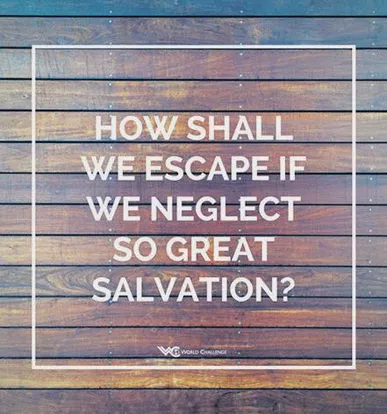
warning – ‘how shall we escape if we neglect
such a great salvation?’ – reveals something
of the wonder of the gospel He has entrusted
to us.

the ENd word
Too many tabs open? Listen to the Bible
Elizabeth McQuoid
‘I’ve got too many tabs open!’ Maybe it’s just me, but sometimes that’s how I feel.
Getting ready to send our son off to university, looking after a close family member with a serious health condition, juggling work and family routine with a special-needs child – sometimes I feel overwhelmed.


Wives according to 1 Peter: Models to the church
There’s a certain irony that it has recently been International Women’s Day, and I am writing about 1 Peter 3v1-6, which starts, "Wives, in the same way submit yourselves to your own husbands…." If there is any topic that makes people view Christianity as outdated or anti-women, this is the one.
Yet our conviction as evangelicals is that the commands of the Bible are not just true; they are good. Here are three ways in which these instructions by the Apostle Peter are good for women.