By Randle Manwaring
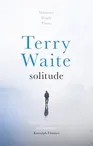
The Amate Press, Wantage. 65 pages. £5.00
ISBN 0 947561 45 5
Randle Manwaring is a retired Anglican layman who writes poetry, cares deeply about words, true Christian unity, and the cross.
The atoning death of our Saviour is dwelt on, clearly and without cliche, in the first four of these five poems, and touched on in at least another ten. His heart for unity is laid bare in four of them, with two using humour as a springboard for his serious points. The final page, without humour, is one we could all ponder before firing off the next letter attacking someone from a different Christian tradition from our own.
The author's love of the music and meaning of words has led him into print many times, with his own books of verse and in the anthologies of others. This latest slim volume collects his specifically Christian poems together, though he says: 'Whatever the subject, I have always endeavoured to write as a Christian.' We have to manage without any dates or local colour except for his brief foreword.
Often the poet's well-crafted simplicity will reveal deeper meanings the second or third time around, as with 'Thomas', 'Jonah', or 'In Letters of Hebrew, Latin and Greek'. Others seem to have a one-level simplicity - or am I missing something?
He sometimes trips up. 'Whatsoever You will say' and 'Hail to You by men despised' do not work naturally or grammatically, and the capital Y is an odd throwback. Sometimes, even, his stanzas look suspiciously like the chopped-up prose of lesser versifiers, as in 'When you become a Christian'. And 'When God became our neighbour' is similar to others in that vein, which is why a date would be helpful.
My own reading marked fifteen poems as very good, but half a dozen as under-achievers. 'Join the witness' is most stirring; 'St. Augustine' most stretching, and 'The Five Brothers' most sobering.
But what leaves one reader cold may warm the heart of another; there is nothing here to mislead and much to uplift. May the writer continue to bear more poetic fruit in old age.