

Christianity’s future is likely to be shaped by African women, new research says – but there is a danger of false teaching being influential as well.
New research by American scholar of the history of mission, Gina Zurlo, shows that women are the majority in churches nearly everywhere in the world, and that Christianity’s future is poised to be shaped by African women in particular.
Christianity continues its demographic shift to the global south. In 1900, 18% of Christians lived in Asia, Africa, Latin America and Oceania. Today, that figure is 67% and, by 2050, it is projected to be 77%, according to Zurlo.
Africa is home to 27% of Christians, the largest percentage in the world. By 2050, that figure will be 39%. For comparison, the US and Canada were home to just 11% of all Christians in the world in 2020 and will probably drop to 8% by 2050. Furthermore, the median age of Christians in sub-Saharan Africa is just 19.
And those Christians are mostly female. Kenyan theologian Philomena Mwaura says: ‘The church in Africa has a feminine face and owes much of its tremendous growth to the agency of women.’
But Simon Percy of Pastor Training International (PTI), strikes a cautionary note. He agrees with Zurlo that Africa could well be at the epicentre of the Christian world by 2050 and women will indeed play a major part in that trend. But he also stresses that the serious false teaching of the Prosperity Gospel must be tackled by providing largely untrained pastors with the vital training they need to discern truth from error.
Rose Eyanu (see photo) is just one African Christian woman who has benefitted from PTI’s preaching conferences. Reacting against the false gospels pedalled across the media and elsewhere, she highlights the importance of PTI’s teaching as the church in Africa seeks to expand. She believes that it is vital the church in Africa must never lose sight of key imperatives such as the gospel is not a book, but a person – Jesus Christ; preaching the gospel will always mean preaching Jesus Christ and the gospel is Christ and Christ alone.
Rose concluded: ‘I am excited that, through PTI, a breed of zealous yet knowledge-able ministers is being birthed. An army not ashamed of the gospel. Preaching and drawing people to Christ and not to themselves. Acknowledging that the gospel is the only power of God that saves.’
For decades it has been known that women are more religious than men by a variety of measures, from frequency of prayer to worship attendance. Christianity is no exception.
Data from Pew Research shows that, compared with Christian men, Christian women are more likely to attend weekly church services (53% versus 46%), pray daily (61% versus 51%) and say religion is important in their lives (68% versus 61%).
It’s not a new trend. In the Gospels, women were the last at the foot of Jesus’ cross, the first at His tomb. Research has shown they were critical to the growth of the early church, being more likely to convert to Christianity than men, and most early Christian communities were mostly women. And the fact is that the majority of Christians today are women.
Analysis: Why theological education is essential
Riad Kassis writes:
When John Stott, visited churches around the world, he was often surprised at the low quality of preaching that he saw in many of the churches he visited. This, he thought, had to be improved. How else would church members be equipped to reach out and transform local communities?
This is not just a problem in majority world nations, but in the UK too. Since the UK Census 2001 posed a question on religion, the number of people identifying as ‘Christian’ has continuously fallen, with analysts widely predicting that the 2021 census results – out later this year – will show a further decrease. In 2011, less than half of those who self-identified as ‘Christian’ believed that Jesus Christ was a real person who died, came back to life and was the Son of God.
Perhaps partially as a result, the UK and many other Western nations have become increasingly secular in recent years, leading to the global centre of Christianity moving southwards in terms of population and an increased focus on Christian teaching in non-Western nations.
Church leaders from majority world nations have long been under-represented on the Christian world stage. Many of us have heard of Hillsong, but how many could name an African-based church movement? Ensuring that their theological understanding is strong is equally important to fulfilling the Great Commission, and to making their contextually relevant voices heard globally.
The Langham Scholars programme aims to equip and support aspiring scholars through theology-based PHDs. Nathan from Sri Lanka, for example, is completing his thesis which focuses on theological anthropology in a South Asian Buddhist context. Over 80 men and women are currently part of the scheme, with graduates now in over 90 countries worldwide.
John Stott once said that ‘we should be BBC Christians’, espousing Balanced Biblical Christianity. Fulfilling the Great Commission, to his mind, required deep theological foundations and, more importantly, the equipping of pastors, evangelists and ‘ordinary’ Christians to create disciples in whatever situation they are in.
The question is, what can we do to encourage our church leaders and preachers to increase their understanding of the Bible, and use it to inspire our churches to make real impacts in our communities?
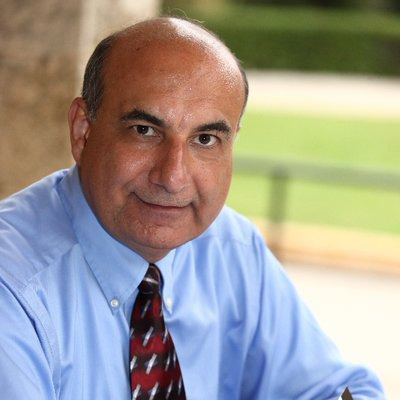
Riad Kassis is International Director for the Langham Scholars program of Langham Partnership and the former International Director of the International Council for Evangelical Theological Education (ICETE).


