It can feel a little mysterious.
Most of us try to avoid pain. But self-harm – the act of inflicting pain or injury on yourself – is far from rare. Statistics are notoriously hard to verify but it’s thought that about 13% of 11–16 year olds will try – some continue well into adulthood.
But what is it?
Unlike attempted-suicide (an act of self-injury intended to end life), self-harm is an attempt to keep living in the midst of huge pain.
We live in a fallen world. All of us know what it is to be hurt but, for some, the hurt runs particularly deep. Bullying, sexual abuse, domestic violence – even living in a perfectionistic environment – can cause devastating emotional wounds. And, as these painful situations persist, those enduring them begin to believe the lies they engender. With each punch, each rape, each withering comment, the person bearing the brunt can lose sight of who they are and begin to believe they are worthless, useless, pathetic, unlovable, even responsible for their pain …
Often, such experiences also taint people’s view of the world around them – even God – ‘everything is out of control, there is no hope, not even God could love someone as dirty as me’, they muse.
Such a worldview feels real because it resonates with experience, but it can also feel unbearable. So people try to mute the emotions. That’s where self-harm comes in.
One small piece of skin
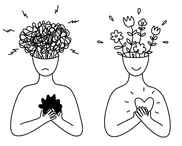
When life is chaotic, some people control one small piece of skin, by hurting it, just so something feels under control. When life feels full of false guilt, some people punish themselves with pain so ‘justice’ can be done. When the pressure of life builds up to explosion point, some people put a hole in their body so the ‘bad stuff’ can flow away. When everything becomes too much, some people numb themselves with an overdose so they can have peace for a few hours.
It’s a technique that brings a measure of release, but not for long. People find they need to self-harm more to get the same effect. And, for some, something akin to an addiction can begin.
Helping people break free
But there is hope. As individuals, and as a church, we can help people break free from the snare of self-injury: • We can love through hospitality. • We can act to end any ongoing abuse. • We can listen to their stories and remind them that God is not indifferent to their pain. • We can help them see the links between past hurts, present beliefs and the ongoing temptation to self-harm. • We can help them express their emotions in more constructive ways. • We can help them take care of their wounds (in conjunction with medical professionals). • We can help them flee and fight temptation by talking through strategies for when the urge to harm begins to take control. • We can pray with them and for them with passion and perseverance. • And we can help them gently re-orientate their beliefs.
Sharing the gospel
How liberating for those feeling out of control to see the authority of Christ in the Gospel of Mark. How freeing for the guilt-ridden to see the wonder of forgiveness from Ephesians. How joyful for those convinced they can never be clean to find the gift of righteousness in Romans. How glorious for the hopeless to glimpse the fullness of life set out in John 10.10. How wonderful for all to find their true identity in Christ.
The Holy Spirit
And, over all these things, God’s Spirit is at work. Through him, people change – not always quickly – but beautifully. And the journey from self-harm to freedom begins.