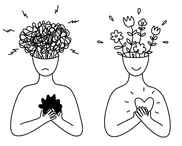
Human beings have a remarkable ability to be inconsistent. So often there are gaps between what we believe and what we feel.
Maybe you’ve noticed it: that ability to assert confidently that Jesus is sovereign and yet still feel everything is out of control; that desire to thank God for his sufficient grace and yet still feel unendingly guilty; or that conviction of adoption as precious children sitting alongside a repeated suspicion that we are alone, unloved and unable to change.
Of course, such a dichotomy between our confessional theology and our functional theology impacts more than our emotions, it undergirds much of our behaviour too. Addicts can know they are free, but still run back to their slave-masters. Christians may rejoice in the call to purity and yet fall into sexual sin. Such struggles are sometimes down to bad doctrine or intentional rebellion but, in many a faithful church, people believe good doctrine and, in many ways, want to live it out – but there’s a problem: they’re still listening to other beliefs more.
These things are part of the sanctification battle we all face. The Ephesians 4 pattern of putting off the old self, having our minds renewed and putting on the new is not an event, but a lifestyle that continues until Jesus returns or calls us home. And, like all battles in the Christian life, we are called to fight alongside one another. So how can we help people be more conformed to the likeness of Christ by joining the dots between biblical belief and day-to-day living?
Much as it might be tempting to just keep asserting what is true (and that, of course, has its place), the process of change tends to much more nuanced than that.
These six steps, walked-through prayerfully, may prove helpful:
1. Recognise the inconsistency:
Personal blindspots are a talent for many – we can’t always see inconsistencies in ourselves. This is an opportunity for gentle questioning: ‘In what areas are you struggling to put your beliefs into action right now?’ or maybe a more direct ‘Can we explore some areas where I suspect we are both going astray?’
2. Review daily living:
When and where are the very specific crunch points? When, exactly, does confidence in sovereignty give way to panic? When the boss makes demands, the children won’t stop screaming, or when that relative goes into hospital again?
3. Research the roots:
Wayward functional beliefs don’t just pop out of nowhere. Often they stem from deep pain. Someone who has been repeatedly told they are useless by an abusive parent or partner is very likely to struggle with the idea of God having gifted them. Someone who has experienced chaos in life understandably struggles to grasp security, even if they see it taught well.
4. Reinforce God’s kindness and grace:
Assuring people that their Heavenly Father knows about this gap between confession and practice – and is active in it – is essential. He’s a gentle and good Father who grows his children – applying mercy, forgiveness, comfort, love and discipline in the ways He knows to be best. When false beliefs stem from pain, comfort and love will be the places to focus.
5. Reaffirm a desire to live consistently:
Help people express the struggle and the goal to be more like Christ. ‘Father, I’ve been living a lot of lies about you and myself, particularly X,Y,Z, and letting go of those beliefs feels really hard, but I know your word doesn’t lie, I know the truth I see there is better by far, help me to live in the light of it every day.’
6. Re-orientate the small moments:
We can help each other ‘mind the gap’ and turn each moment of inconsistency into an opportunity for worship. When we nudge each other to look at Jesus, ‘this is out of control’ becomes a chance to thank God for being on his throne; ‘I’m a mess’ becomes an opportunity to focus on God’s unending mercies and ‘I’m hopeless’ can morph into a confident ‘He who has begun a good work is going to bring it to completion’. Little by little, the gap will begin to shrink until one day, in perfection, the gap will be no more…